
'Feminism is not a noun but a verb': Reflecting on a life journey of learning and unlearning in Nepal

- Published On
- 10 Apr 2026
- Published By
- MenEngage Alliance
- Reading Time
- 9 minutes
- Resource Type
- Meet A Member
‘’For me, being feminist is an evolving process; we don’t become feminist one day, we always evolve. Feminism is not a noun but a verb, and it demands actions.’’
Sanjog Thakuri, founder of Hami DajuVai (HDV) and winner of the 2025 Kamla Bhasin South Asian Award, describes feminism as a practice. With roots in child rights and advocacy for marginalised communities dating back to 1995, Sanjog brings nearly three decades of human rights activism, including the past one and a half decades focused on questioning patriarchal norms and engaging men to rethink masculinity in support of feminist values.
In this conversation, Sanjog reflects on experiences that have shaped his work, his journey with feminism, and the critical questioning he has experienced, which led him to grow. He explains why men’s participation must strengthen, not overshadow, women-led struggles.
What sparked your involvement in activism, and why did gender justice become your central cause?
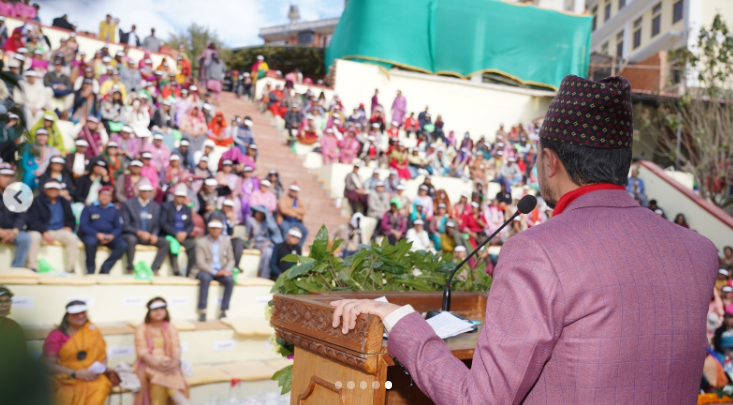
My journey in activism began early, in 1995, when I was 8 years old, when I joined the Hatemalo Child Club, established in the same year in Nepal. I was initially drawn to the acting classes, but the club soon opened doors to learning about child rights, human rights, and social justice. My feminist values were shaped by my sisters, whose boldness and outspokenness taught me that women can be powerful.
“Watching my sisters speak up fearlessly, even when society called them ‘too bold,’ showed me that real change starts with challenging what’s considered normal.”
As I continued to study feminism, I began to notice gaps within the child rights movement itself, particularly the lack of women’s participation. In 2021, I wrote “Feminist Analysis of the Nepali Child Rights Movement”, sparking conversations about inclusivity and accountability. This brought the very important debate and discussion on why there are fewer women in child rights networks of Nepal and why we still see all-male panel discussioned being organized and normalized within the child rights movement. I am glad that after this discourse, there has been a significant change, though it is still not satisfactory.
In 2008 and 2009, my engagement with MenEngage Alliance Nepal broadened my understanding of gender, children’s participation, and men’s roles in promoting equality. These experiences inspired me to take action.
The founding of Hami DajuVai
After years of learning and unlearning, I finally founded Hami DajuVai (HDV), also known as Nepali Brothers, in 2019. Hami DajuVai is an intersectional, youth-led feminist organization working to advance gender equality and social justice by engaging men and boys in building a just society. Through this work, I continue to challenge patriarchal masculinities while supporting men and boys in rethinking manhood and reinforcing feminist values.
What current projects are close to your heart?
We are working on several projects at the intersection of academia, government, society, and gender justice because I believe we cannot challenge harmful gender norms without addressing them at multiple levels. Hami DajuVai participates in spaces such as the Youth Hub established by Plan International Nepal as part of its broader youth engagement and social norm change work.
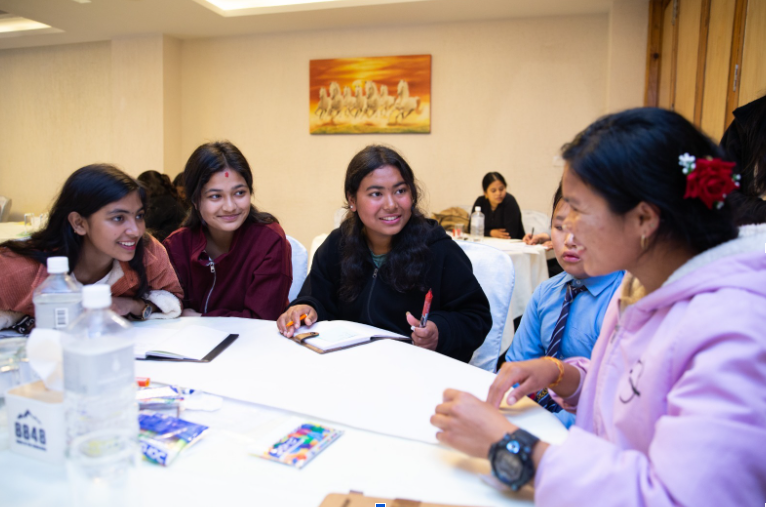
Through this platform, Hami DajuVai implemented creative and participatory federal-to-local-level policy initiatives. For instance, it initiated Nepal’s first live online drama during COVID-19, organized youth-led discussions on child rights and local planning, and led campaigns such as Girls’ Take Over and #EverydayHERO. These activities used arts, dialogue, and digital spaces to amplify young voices and challenge harmful gender norms.
Another project, Security and Justice (SJP), funded by the United Kingdom Department for International Development, works to empower individuals and strengthen community and institutional systems to prevent and respond to gender-based violence (GBV)
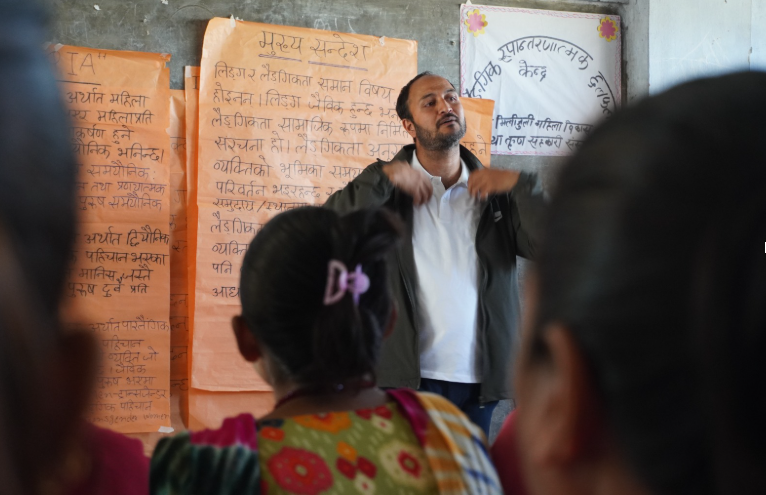
The project brings together communities, civil society, and state actors to challenge harmful social norms, improve access to justice and support services, and strengthen accountability.By actively building public trust in formal protection and justice systems, this project works to create safer environments for women, children, and marginalized groups. The project currently operates in Lumbini, Karnali, and Madhesh provinces
One project close to my heart is the weMEN Club, which engages boys aged 7 to 13 in reflecting on boyhood, men and masculinities, and gender equality. The program aims to promote gender equality and address gender-based discrimination and violence from an early age.
weMen Club junior
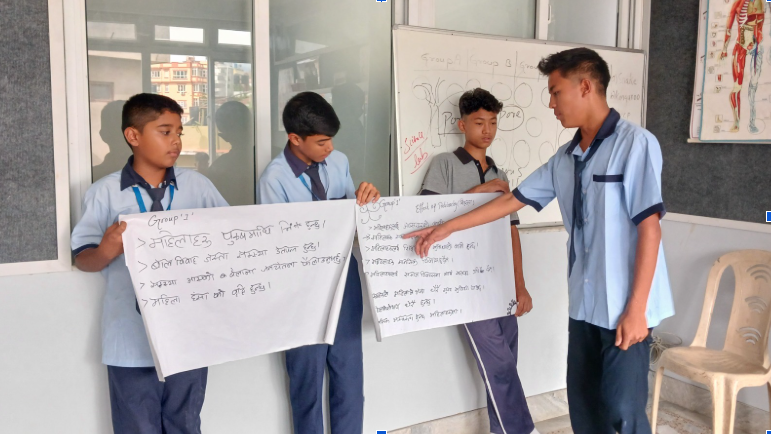
The program runs weekly sessions in schools, where boys explore topics like gender roles, discrimination, and healthy relationships with the guidance of trained facilitators. To measure impact, we gather feedback from girls and parents on behavioral changes observed in the boys.
To address teen dating violence we have initiated “Let’s Love the LOVE” campaign, which encourages teenagers to discuss consent, healthy relationships, and inclusivity. Through interactive workshops and creative activities, Hami DajuVai empowers youth to become advocates for gender equality and create safer spaces for girls, women, and LGBTQIA+ children, as well as male youth themselves.
We are also planning to expand to Early Childhood Development (ECD), reaching younger children and their parents and teachers as part of our commitment to building a more inclusive and equitable society from the ground up.
How have Kamla Bhasin’s ideas and work influenced your approach to activism and gender equality?
I first encountered her ideas during a gender training, when her book What Is a Boy and What Is a Girl?opened my eyes to the rigid binary ways society defines gender. Although I never met her in person, her speeches, writings, and our virtual interactions shaped my understanding of intersectional feminism and the critical roles of men and boys in advancing gender justice.
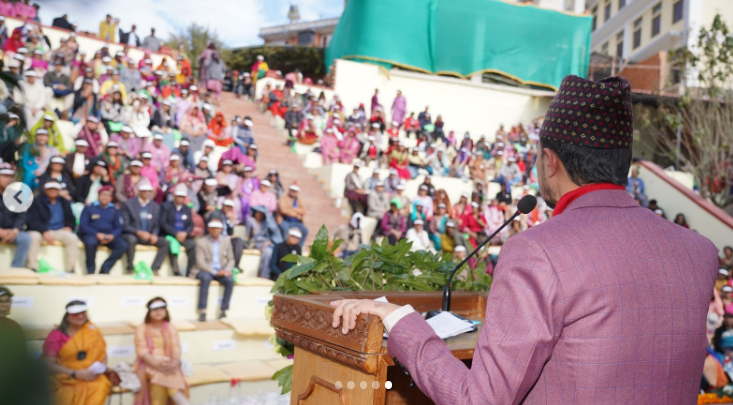
I was especially inspired by how she spoke boldly and clearly about patriarchy — that it affects everyone — in ways that people across South Asia could easily relate to. Her boldness and approach to women’s rights and feminism pushed me to reflect on my own actions, challenge entrenched norms, and work to ensure that men’s participation in gender equality remains accountable to feminist principles.
Since receiving the Kamla Bhasin South Asian Award, what has changed for you and your work?
It is a great honor and a humbling experience for me to receive this award. I consider it a recognition that reaffirms the relevance of the work I have been doing on gender justice and men’s accountable engagement in feminist movements. It has strengthened my determination to continue this work because meaningful change requires persistence and commitment.
I also plan to use the prize funds prize fund to finally publish the Men and Masculinities Journal in Nepal, a project I have long wanted to bring to life. This resource will hopefully provide a space to share knowledge and perspectives from the Global South.
Why do you want to publish this journal, and what do you hope to highlight or accomplish through it in terms of perspectives, research, or impact?
Most research and writing on masculinity today comes from Western frameworks, which are often assumed to represent global perspectives. In reality, South Asian experiences and insights are rarely highlighted and are sometimes dismissed as “regional” or limited. I want to change that.
Through the Men and Masculinities Journal, we aim to center voices and stories from South Asia, showing how men and masculinities intersect with culture, social hierarchies, and activism in our context. The journal will document the experiences of 12 different movements, including the Dalit movement, women movement, Muslim and religious minorities movements, youth movement, child rights and Indigenous peoples’ movements, among others.
We have struggled to publish this journal due to a lack of funding. However, now that I have received this award, we can use the funds to employ writers and editors to bring it to life. If everything goes as planned, I hope to publish the Men and Masculinities Journal by the end of 2026. If not, I will share these stories as a series of blog posts on our website, ensuring that the insights and experiences from South Asia are still accessible to activists and the wider community.
Is there someone from a feminist or women’s rights organization who has been key to your journey, and what did you learn from them?
It’s hard to name just one person because so many individuals and organizations have shaped my journey. Even those with very critical views, people who believe men shouldn’t work in women’s rights, have been invaluable. Their questions and challenges pushed me to stay grounded, disciplined, and accountable in my work.
I’ve learned that men’s role in feminism is not to occupy women’s spaces, but to make their own spaces feminist. At the same time, it’s vital to provide spaces for men to reflect and discuss, because patriarchy harms men too. When men are given the opportunity to learn, engage, and act responsibly, they can truly support feminist movements and help build a more just and inclusive society.
You’ve been a member of MenEngage Alliance since its early foundation. Can you share an example of how a connection or resource from the alliance helped you overcome a challenge or improve a project?
I have been taking part in MenEngage Alliances’ activities and campaigns since 2008 but after the formation of Hami DajuVai we joined the MenEngage Alliance-Nepal chapter formally. One of the most valuable supports has been laxman dai, the current Global Co-Director of MenEngage Alliance. laxman dai is also an advisor to our organization, providing continuous guidance and support. laxman’s mentorship has been a crucial resource for me and Hami DajuVai in navigating challenges and strengthening our programs.
Furthermore, through MenEngage Alliance, I gained access to online sessions, discussions, and safe spaces to learn diverse perspectives. These resources helped me understand current debates, challenges, and innovative approaches in the field. Thanks to this support, I was later appointed as a consultant for the Ministry of Women, Children, and Senior Citizens in Nepal to draft the Men’s Engagement Strategy to end gender-based violence for the government of Nepal, which will hopefully be approved soon. Through the network, I have also been able to participate in national discussions as a leading voice on men’s accountable engagement in gender equality.
In your acceptance speech for the Kamla Bhasin award, you talked about being questioned as a man working on gender equality. How do you respond to skepticism when people question your work?
My journey as a man engaged in gender justice has not been without skepticism and questioning. Early on, in college, I was ridiculed for expressing feminist values and behaving in ways that challenged traditional ideas of masculinity. Over the years, I have also been questioned directly about my feminism.
At one event, a woman asked me, “Are you a feminist?” When I hesitated, she challenged me, “If you don’t consider yourself a feminist, how can you speak about gender equality?” At another, a friend said, “You’ve never lived a woman’s life. Call yourself pro-feminist instead.” Later, someone criticized the “pro” prefix, saying I was afraid to claim feminism.
These moments were difficult, but they were also transformative. They forced me to reflect on what it truly means to be a man in feminist work and the responsibility men carry in dismantling patriarchal norms. I realized that while men benefit from patriarchy, we must remain accountable to women and to the principles of gender justice.
Skepticism and criticism are part of the work, and they should not derail our efforts. I learned to rely on dialogue, debate, and continuous reflection, which helped me navigate these challenges and confidently embrace feminism while respecting diverse perspectives.
Based on your many years of work for gender justice, what is one lesson or insight you would like to share with others working in the field?
This is not a single insight, but I believe that when working on issues like gender justice and engaging men, it’s important to see the work as part of a larger movement rather than in isolation. In my experience, efforts disconnected from schools, government, or civil society often struggle to create lasting change.
One of the most important lessons I’ve learned is the value of clarity. When goals, approaches, and outcomes are not clearly defined, even the most well-intentioned programs can mislead the discourse or create confusion. Clarity helps guide teams, communicate effectively with communities, and ensure accountability at every step.
I’ve also realized how vital it is to invest in the right resources. Misconceptions about gender and masculinity are everywhere, and without proper materials, training, and support, even the most well-meaning efforts can miss the mark. Having the right resources doesn’t just help people understand gender issues but also gives them the confidence and practical tools to confidently work on gender equality and feminism.
Receiving this award is a big achievement, and of course, it comes with responsibility. How are you making sure Kamla Bhasin’s ideas and values reach younger audiences in your community?
I feel truly grateful for winning this award. Holding a recognition named after Kamla didi makes me feel both honored and deeply responsible. Her ideas — that men’s engagement is essential, that patriarchy harms men too, and that men must be accountable- are at the heart of everything I do.
I strive to bring these ideas to life by involving men in care work, sharing about them in weMEN’s clubs, and engaging young people so the next generation understands the importance of gender equality. This award motivates me to continue carrying forward Kamla didi’s vision, ensuring her work inspires meaningful action and accountability in our communities.
Kamla Bhasin bio
Kamla Bhasin (1946 – 2021) was a pioneering South Asian feminist, activist, and writer. Born in Punjab she became an icon of India’s women’s movement, inspiring generations through her speeches, poetry, songs, and writings.
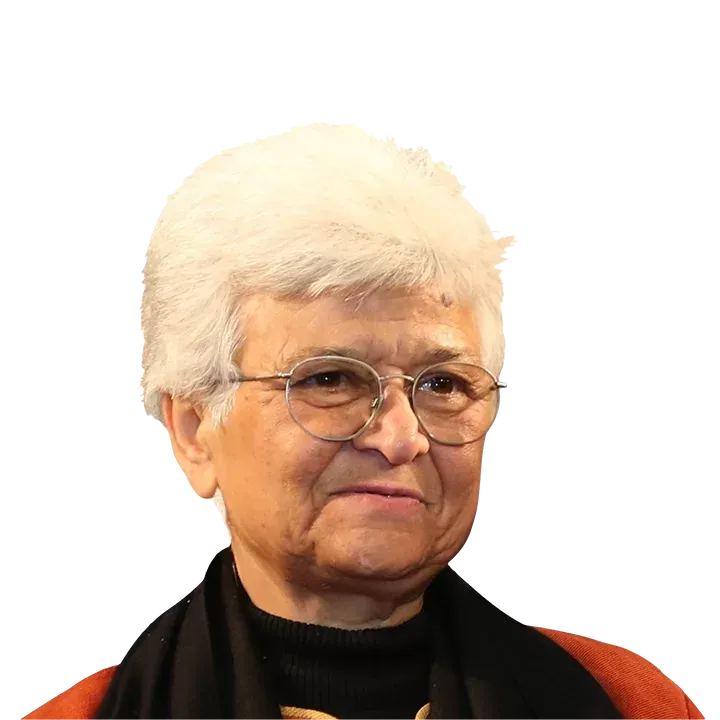
Kamla co-founded Sangat, a South Asian women’s network, and Jagori, a women’s rights NGO in India. She worked tirelessly to challenge patriarchy, promote gender equality, and engage men in feminist movements, famously saying, “Men of equality are not afraid of equality.” Her contributions to feminist activism, education, and advocacy continue to inspire change across South Asia.
I believe that feminism is not just for women; it is a call for all of us to unlearn, reflect, and act, so that men too can live free from the chains of patriarchy and help build a just and equal world.