
Facing the "Red Pill": How we defended gender justice on a global platform

- Published On
- 22 Apr 2026
- Published By
- ABAAD-Resource Center for Gender Equality, Lebanon
- Reading Time
- 4 minutes
- Resource Type
- Case study
The rising media interest in the manosphere offers a strategic opening for gender justice organizations working with men and boys to influence mainstream narratives. When Lebanese gender justice organisation, Abaad – Resource Center for Gender Equality, was invited to go head-to-head with a red-pill influencer on France 24, they seized the opportunity to dismantle misinformation and fiercely champion the case for equality.
In 2025, the manosphere was propelled into public attention after the global success of Netflix’s Adolescence — a four-part drama that drew the link between male-centric ‘manosphere’ online cultures and violence against women and girls. The show generated public, media, and political discussion on men, masculinities and the manosphere all around the world.
It was in this context that international news channel, France 24 Arabic, organised a live TV debate to bring together voices from across the political spectrum to unpack the rise of ‘red-pill’ narratives — which promote the idea that there is a coordinated global conspiracy against men and boys.
To ground the debate in the reality of the South West Asia and North Africa (SWANA) region, France 24 Arabic reached out to Abaad – Resource Center for Gender Equality. Known for their work in Lebanon and across the region, Abaad’s expertise in gender equality and in male-engagement programming made them the ideal choice to represent progressive perspectives on an international stage.
There was one condition — a Jordanian YouTuber, Kareem Atta’i, known for provocative ‘red-pill’ content — was also invited to take part in the debate.
For advocates in the gender justice field, the decision of whether to engage with proponents of harmful narratives is a longstanding dilemma. The Abaad team met to weigh the pros and cons, ultimately deciding that the chance to shape the media’s gender-justice narrative was too important to pass up.
‘To fail to prepare is to prepare to fail’
Recognizing the high stakes, Abaad adopted a rigorous and collective approach to the challenge. The team researched their opponent, analyzing his communication style, typical arguments, and emotional triggers allowed the team to anticipate his talking points and tactics.
Knowing airtime would be limited, they distilled complex sociological concepts into a few core, evidence-based messages supported by Abaad’s regional data.
While messaging is important, the team also recognised the need for a spokesperson who can distill the key points in a composed and relatable way.
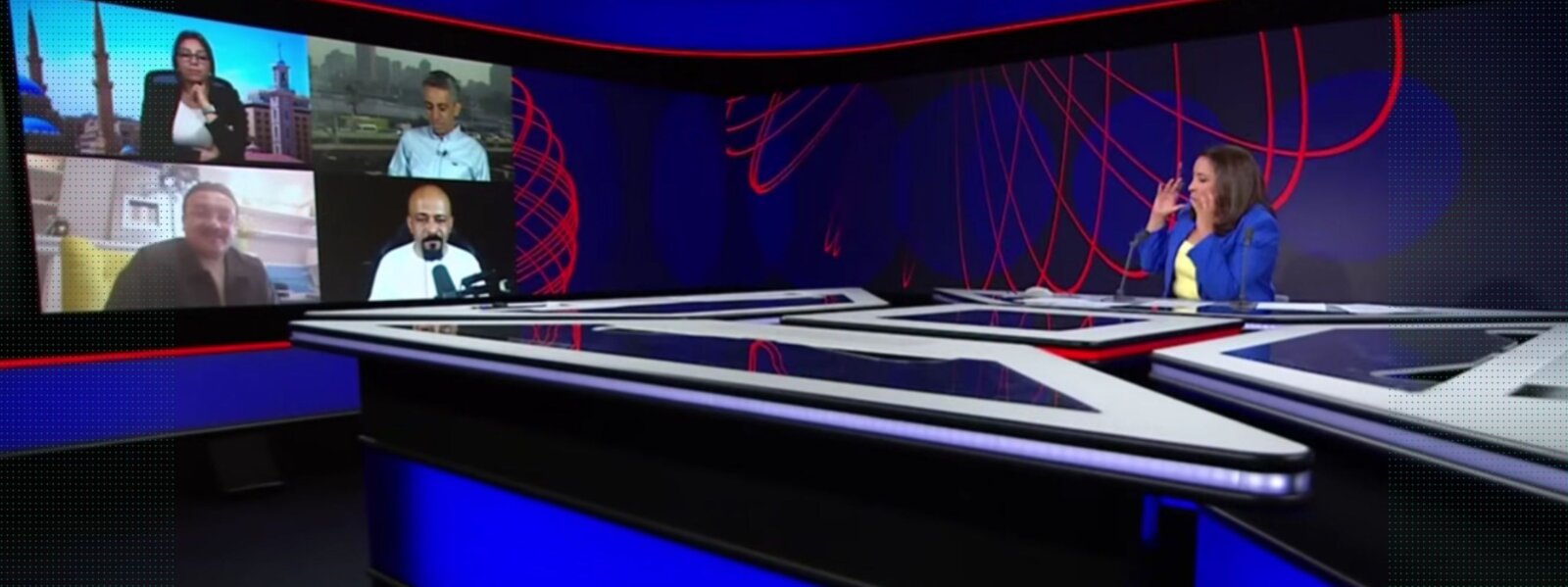
For this, they nominated Stephanie Bou Challa, Capacity Building Coordinator, to front the organisation on France 24. Her confident communication style, field experience, subject knowledge, and fluency in Arabic meant she was the ideal choice to put forward Abaad’s feminist position in a clear, relatable way.
The debate experience
From the start, Atta’i presented himself as a specialist in gender relationship dynamics and an activist promoting ‘red pill’ ideas in the Arab world. He argued that gender roles are biological imperatives, and insisted that men and women should follow stereotypical roles.
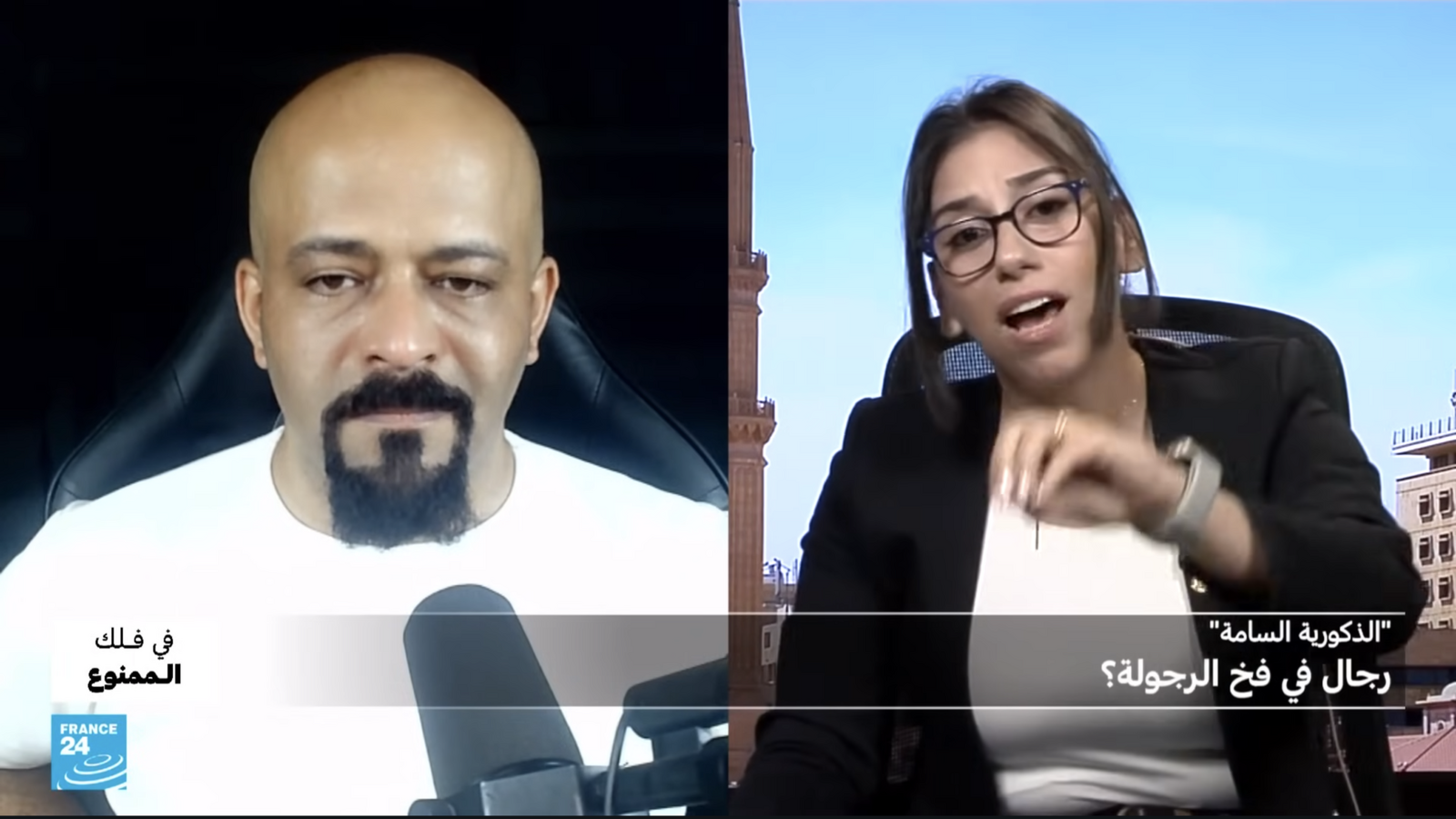
Grounding her response in practical experience and regional data, Stephanie was able to promote an informed, progressive, and positive narrative, while presenting complex ideas in an accessible way. Reflecting on the experience, Stephanie said:
‘We anticipated that the red pill influencer would be antagonistic and provocative. Ahead of time, we had reviewed his videos to analyse his style, tone of voice and even his body language.
The time constraint was another issue. So we decided to focus on delivering a few clear but impactful key messages rather than attempting to cover everything and all the points in depth.’
Her composed, evidence-based insights found natural allies in the other panelists. Dr. Issam Shaaban, a social anthropologist, and Mr. Adnan Khaldi, a psychologist, echoed her perspective that the “crisis of masculinity” isn’t caused by women’s rights, but by a patriarchal system that places an impossible burden on men to be sole providers.
Together, they dismantled the influencer’s claims, arguing that “manhood” and “womanhood” are strongly shaped by culture and socialization. Moreover, they emphasised the benefits of equality for men, for instance where equitable sharing of economic and domestic responsibilities reduces financial pressures on men and — as international data shows — leads to happier, healthier societies.
The response to the debate revealed a stark divide between public digital spaces and private reality. While online comment sections were dominated by hostile, sexist, and seemingly performative rhetoric, the private feedback told a more nuanced story. Abaad received significant support from male colleagues and community members who clarified that the “red-pill” ideology did not represent them. This contrast underscores a vital lesson: online comment sections are often echo chambers of misinformation rather than accurate barometers of public opinion.
Lessons learned
The success of the France 24 intervention was the result of a coordinated approach. Looking back, the Abaad team identified a number of lessons for any organizations looking to face antagonists and conservative voices in public and media spaces.
- Preparation is key: The preparation phase was the most important factor in enabling the team to present their perspective clearly and confidently to a large television audience. By focussing the majority of the effort on the preparation, the team was able to plan for different arguments, prepare clear and compelling talking points, and understand their opponent. All of this meant that Abaad’s engagement had been tested and refined — before the cameras were rolling.
- Teamwork is powerful: Rather than leaving the weight of the intervention on one person’s shoulders, Abaad treated the TV appearance as a collective challenge. This provided an organisational safety net, ensuring that Stephanie felt backed by the organization’s collective expertise and moral support.
- Distil the message: In the fast-paced environment of live TV, complexity is always a challenge. The team worked to refine dense gender-justice concepts into short, evidence-based points that could be delivered clearly, concisely, and under pressure. By involving Abaad’s wider team, they ensured the messaging was not only theoretically sound but also grounded in real-world data and community experience.
- Composure is a tool: By staying calm and avoiding being provoked, Stephanie denied her opponent the chance to derail the conversation. This kept the focus on the message, making it accessible to a wide, neutral audience.
- Embrace opportunities to learn: The debate was not just a solitary chance to influence the media debate. It was a testing ground for the organisation’s communications strategy, and a learning experience they will take forward and share with others. Following the session, Abaad shared about their experience in a global meeting with members of MenEngage Alliance, providing cross-regional learning on engaging with antagonistic viewpoints in the media.
The France 24 debate highlighted Abaad and MenEngage Lebanon’s commitment to promoting gender equality — even in potentially antagonistic media environments. By pivoting from ‘polished’ communications outputs to the unscripted format of a live televised debate, the team proved that clear, evidence and practice-based arguments can successfully challenge harmful narratives.
Abaad’s experience marks a strategic lesson for those working to promote gender and social justice: to dismantle emerging online ideologies, advocates must be willing to meet them head-on, in live and unfiltered scenarios.