
'Men have been taught to suppress their capacity for care. This has to change.'

- Published On
- 30 Oct 2025
- Published By
- MenEngage Alliance
- Reading Time
- 2 minutes
- Resource Type
- Op-ed
MenEngage Global Secretariat Networks Associate Oswaldo Montoya represented the Alliance at a panel organized by the Permanent Council of the Organization of American States (OAS) in commemoration of the International Day of Care and Support. He delivered these remarks on the importance of strengthening care systems.
-
It is often said that the first sign of civilization was not a tool or a weapon, but a healed femur bone. A human bone that can only heal if someone stayed, protected, fed, and cared for the injured person. Care is perhaps the oldest and most enduring human practice.
Care is deeply human. It is innate in all people, regardless of gender.
But patriarchal and economic systems have taught men to suppress this dimension, unfairly assigning care to women and devaluing it in our economies. That is why women and girls carry out more than 76% of unpaid care work, which limits their opportunities in employment, education and leadership.
MenEngage Alliance works globally, regionally, and nationally to challenge patriarchal masculinities and promote gender and social justice by engaging men and boys.
We understand care as a political, economic, and relational issue — not just something that happens in private, but a collective responsibility.
Our work on care is not about getting men to “help more” at home. It is about men transforming themselves and becoming agents of change to transform all institutions and systems related to care. When men transform our identities — including our beliefs and attitudes — we understand that caring for others (children, elders, people who are ill) is a fully shared responsibility, not a favor we do when we feel like it or have a bit of free time.
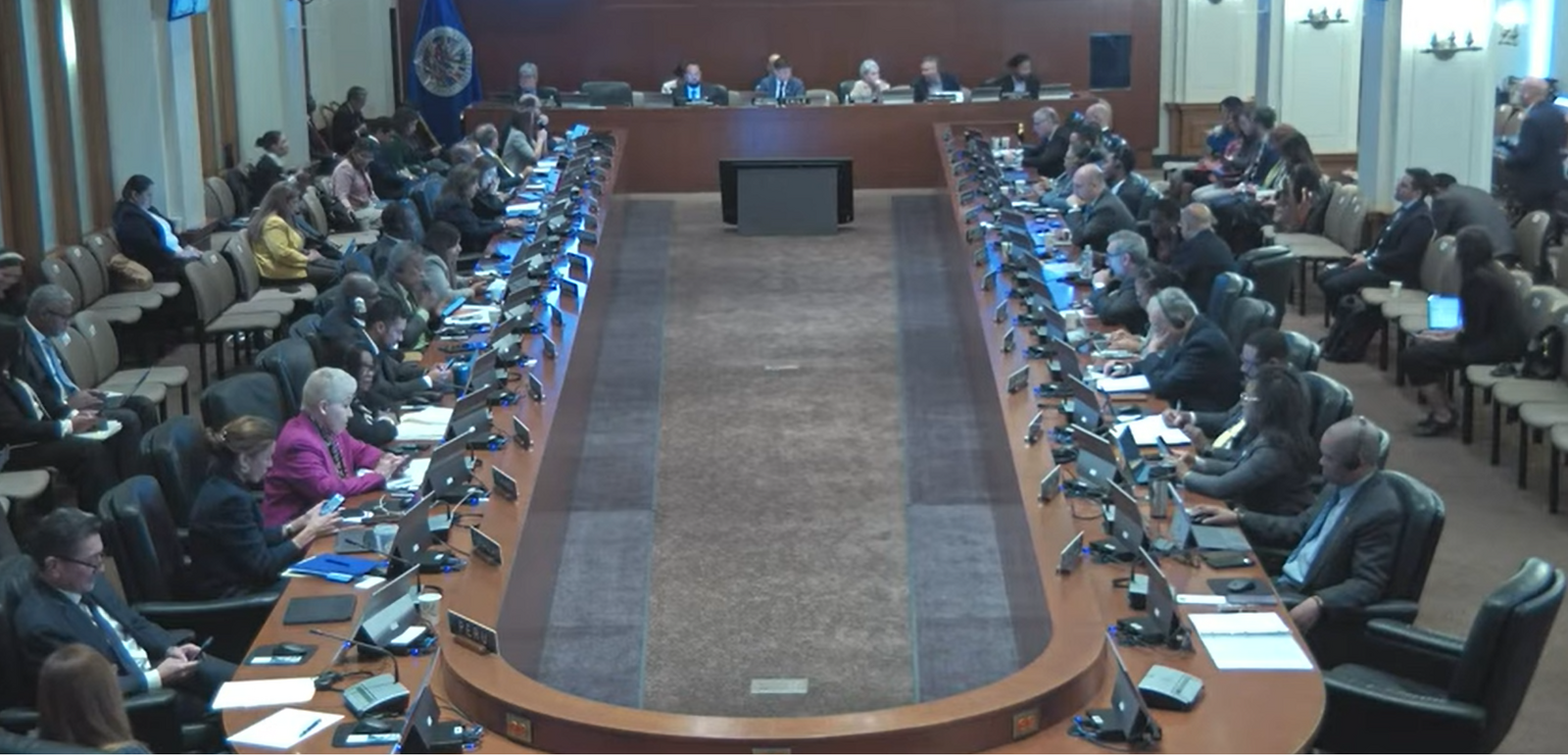
Regular meeting of the permanent council of the Organization of American States (OAS) in commemoration of International Day of Care and Support 2025 (YouTube).
Our work on care is reflected in three key areas: advocacy, alliance-building, and work with men.
Regarding advocacy in global and regional policy spaces, MenEngage members have contributed to (among others actions)
- Advocacy within the UN Commission on the Status of Women (CSW),
- Inputs to the UN Working Group on Discrimination Against Women and Girls,
- Advocacy at regional level for public investment in universal care systems and gender-equitable parental leave,
- Collaboration in a series of events organized by UN Women on masculinities and care.
Regarding, strengthening alliances with feminist movements, we have worked intentionally in solidarity with feminist care movements. Our role is to amplify this agenda by adding a critical perspective on men and masculinities.
We have been supporting to men to embrace themselves as caregivers through campaigns, workshops, and trainings, we challenge the idea that care is “unmanly” and offer alternative models of masculinity based on empathy, service, and reciprocity.
MenEngage is founding member of the MenCare Campaign that support men and fathers and caregivers, demonstrating men have the capacity to fully share the joy and the burden of caring for others.
We are also launching an initiative focused on working with men in positions of political power to promote their commitment to gender equality, including in the area of care.
As the ILO and the United Nations have affirmed, unpaid care must be recognized, reduced, and redistributed. And we believe that men have a crucial role to play in this transformation.
We work for a world in which men embrace care as a form of power — one rooted not in domination, but in connection.
We call on governments, civil society, and the private sector to commit to create and implement national systems and policies on care and as part of that
- Invest in care infrastructure and services (in education, health, and social work),
- Implement parental leave policies with a gender-transformative approach,
- Promote men’s involvement in care from early childhood education to national campaigns,
- Engage men and boys in dismantling harmful norms that disconnect them from their potential as caregivers.
By Oswaldo Montoya, Networks Associate, MenEngage Global Secretariat