
Why is it an important strategy to engage with men and boys to counter the anti-gender Backlash?

- Published On
- 19 Mar 2026
- Published By
- MenEngage Alliance
- Reading Time
- 6 minutes
- Resource Type
- Op-ed
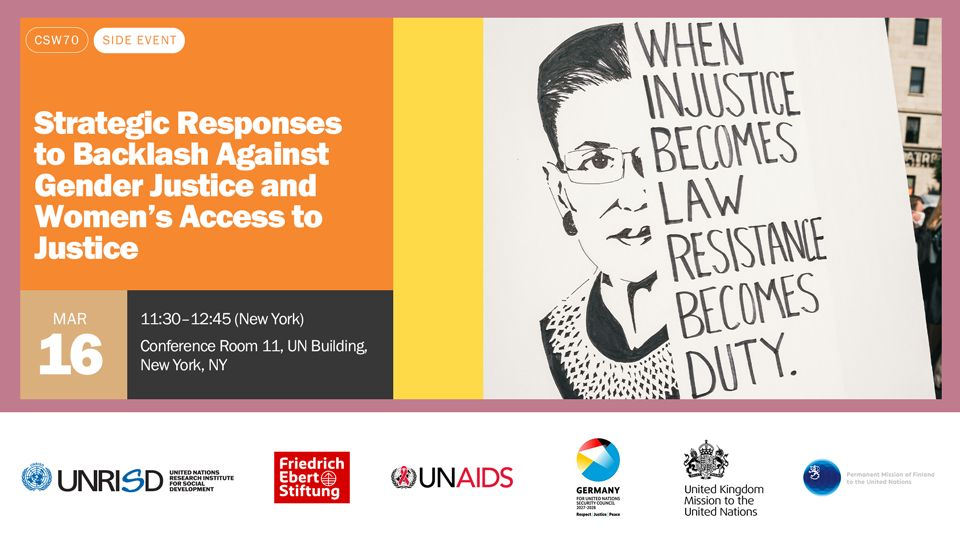
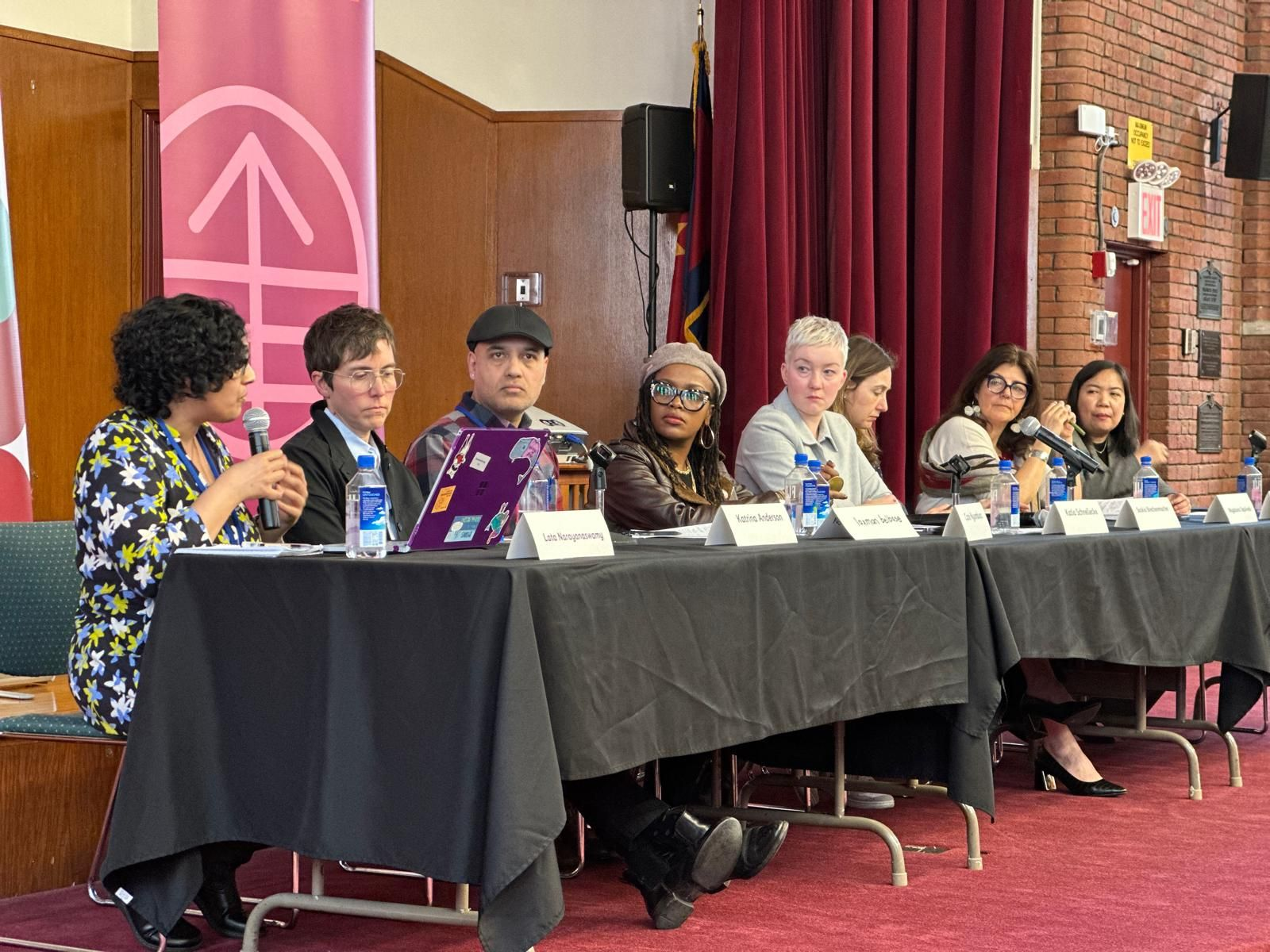
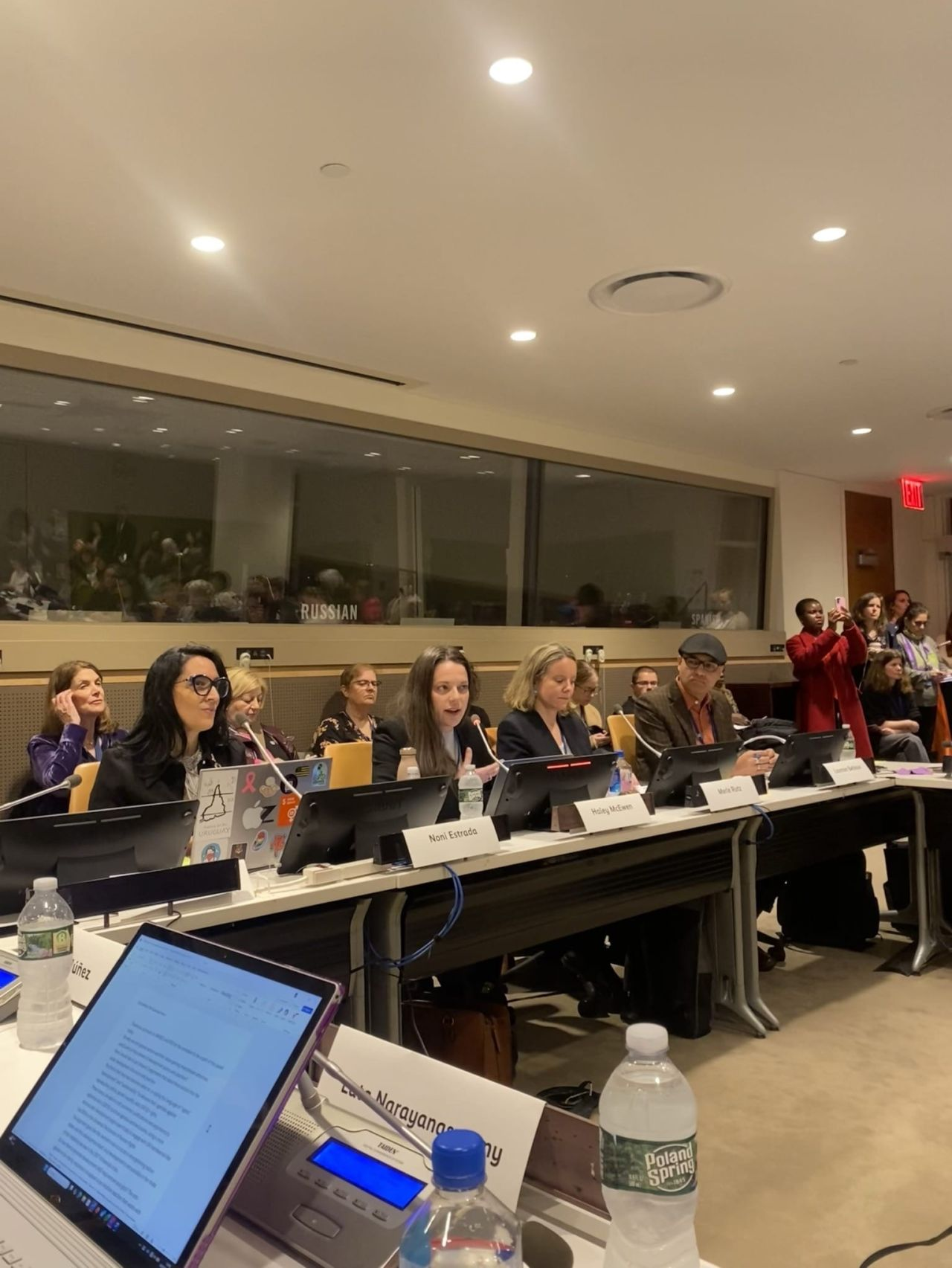
At the 70th session of the Commission on the Status of Women (CSW70), MenEngage Alliance Global Co-Director laxman belbase presented the following address at the CSW70 Side Event — ‘Global Trends and Strategic Responses to Anti-Feminist and Anti-Rights Backlash,’ hosted by the United Nations Research Institute for Social Development (UNRISD) and Friedrich-Ebert-Stiftung (FES). The session explored global trends in anti-feminist and anti-rights movements, examining strategic responses within the context of democratic decline.
-
In contexts where anti-gender narratives mobilize men and boys through grievance and identity politics, what is the most effective entry point for interrupting that mobilization? How can we build sustainable alliances?
Those of you who may not be aware of MenEngage Alliance, we are the largest network that focuses on ‘gender transformative approaches to work with men and boys for gender equality’. With over 1000 members, both NGOs and individuals, across 92 countries in the world, we are organised under 50 national and 6 regional networks. Our membership consists of self identified feminist, women-led, lgbtiq rights, youth led, climate justice, racial and gender justice organisations.
Building onto the premise set up by the previous speakers and complimenting what has already been said and in the context we are currently in, one lesson we have is that we see “gender being equated as something only about women” thereby implying “gender equality” as only “women’s issues”. Such interpretation is misleading on the fact that men and boys, as much as women and LGBTIQ individuals, are also gendered beings.
Men and boys, like anyone else, are not born violent or sexist, which probably helps us to pause and reflect then on what happens to boys and young men during the process of upbringing as the result of which they internalise and exhibit harmful attitudes and behaviours, develop loyalty to dominance, violence, oppression and power over women, girls, gender diverse individuals and other men and boys. This process is about ‘gendering of men and boys’ or, ‘gendered socialisation’ of boys and young men within the stereotypical patterns from an early age — or even before birth in the case of the region I am from — South Asia — if we consider the issue of sex-selection.
To further expand, masculinities — stereotypical and socially constructed ideas, expectations, and behaviours on what it means to be a man — are deeply tied to the growing backlash against gender equality and women’s rights. Ideas, norms, and structural factors relating to masculinities are not just passively caught up in anti-gender movements. Rather, they are actively constructed, mobilized, and weaponized to uphold systems of patriarchy, nationalism, capitalism, racism, militarisation and social control. These ideas often serve as both the emotional fuel and the cultural or political justification for many anti-rights mobilisation and groups.
Masculinities generally disconnect men and boys from healthy, intimate relationships with others around them, as well as with themselves. Notions around masculinities encourage boys and men to engage in high risk behaviors, condone violence against women, grant men the power to initiate and dictate the terms of sex, and make it difficult for girls and women to protect themselves from STIs or violence and to seek health and other services.
The natural physical and emotional closeness and shared intimacies are often swapped for stoicism, autonomy, and independence, creating isolation and loneliness. Stereotypical gender norms around manhood inhibit boys and men’s ability to properly cope with trauma that this isolation and loneliness creates among them. Hence masculinities, and therefore patriarchy, is one of the main root causes of the anxiety and trauma that boys and men are facing today - which probably helps to debunk the myth that the backlash groups have been spreading about ‘feminism’ or ‘gender equality’ gone too far.
In fact, ‘feminism’ and ‘gender equality’ are the solutions that can help liberate men and boys, along with women and gender-diverse individuals, from the stereotypes, making them feel happier, ensure wellbeing and have fulfilling lives. This is to mean that Gender Equality is not a zero sum game, and that men and boys also benefit from gender just and equal societies. Here it is also important to recognise that when we speak of the “movable middle”, we are in majority terms referring to men and boys who are confused and unsure about the direction they head on this issue as the result of the mixed messaging they get from various actors.
Understanding masculinities as both root cause and political tool allows us to respond not only to the symptoms — but to the architecture beneath this systemic and patriarchal social construct. Anti-gender actors mobilize patriarchal ideals to restore traditional power hierarchies, promote narratives of aggrieved or “crisis” masculinities, and frame feminism, LGBTQ+, and immigrant rights as threats to social order.
These dynamics are amplified by online spaces and political leaders who deploy hypermasculine rhetoric to justify nationalist, exclusionary, and authoritarian agendas, contributing to the erosion of democratic norms and increased discrimination. The backlash actors and voices on such platforms, which often mirror offline social dynamics, collectively function as coordinated systems that reinforce sexism, misogyny and male supremacy. Echo chambers such as the online digital “manosphere” can radicalize young men into broader far right and misogynistic ideologies. Hence addressing the root causes requires us to look at the full spectrum of online and offline spaces rather than separate or independent spaces.

It is not just cultural — it’s political and undermines democracy:
Anti-rights backlash is a coordinated political strategy aimed at rolling back civil liberties, suppressing dissent and consolidating authoritarian power. Gender, SRHR, indigenous and LGBTIQ rights are often started first because they symbolise equality and can easily be framed as a threat to the “traditional family”. These narratives unite diverse conservative actors and justify strongman leadership, while tactics such as censorship, banning equality education and scapegoating migrants weaken democratic institutions.
Furthermore the narrative elevates patriarchal authority, both in the family and in politics — while ignoring the reality of diverse families and communities. Here I also find it important to clarify that the current understanding of “family as heterosexual, nuclear, conservatively religious and monolithic” is very much both a historical and contemporary colonial construct and project.
Policy-makers, particularly men in political power, have an indispensable role in this effort. They are uniquely positioned to set and protect rights-based policy frameworks that affirm equality and resist regressive rollbacks, to resource gender-transformative, human rights based and feminist programs working with men and boys for gender equality and support feminist and youth-led movements. Also to strengthen democratic institutions that are being targeted by anti-rights actors seeking to erode pluralism and civic participation, and block backlash strategies — including norms-spoiling at the UN, censorship, and the defunding of gender equality initiatives.
In the face of increasingly organized transnational backlash, policy-makers are not merely responders but critical architects of progressive change. Their leadership can reinforce human rights commitments, uphold multilateral agreements, and safeguard the principles of universality and equality that underpin global peace and sustainable development. I take this time to also share that we, at MenEngage Alliance, are currently working to develop a methodological framework on working with Men in Political Power (MIPP) which will be out later this year.
Engaging men and boys is therefore essential to counter these trends, as they are both primary targets of anti-gender narratives and influential gatekeepers within institutions. Also it is important to understand that ‘engaging men and boys’ is not the end goal nor the “silver bullet” to advancing women’s rights and gender equality. It’s one of many strategies in the efforts to achieve gender, climate and social justice.
We have got lessons and evidence that the work with men and boys that is gender-transformative, feminist informed and human rights based have shown to have promising impacts by encouraging men and boys to become agents of change and taking on responsibility to work to transform patriarchal masculinities. This work is part of the broader intersectional feminist movements, and has ideological alignment with feminist principles, movements and vision.
Countering the social norms that govern structural inequalities and shaped by historical and contemporary trends and institutions, requires long-term strategies. Standing firm to push back on the backlash requires stakeholders who stand for rights and justice to be better organized and work together in a coordinated manner.
As we see, the anti-rights groups have been working together, we also need to come together through multi-stakeholder collaboration and make ourselves “the visible majority again” in pushing back and advancing forward to achieving gender equality and justice. We stand at a very important moment and time where those working on rights and justice need to build Alliances and international solidarity.
-
Written and presented by laxman belbase, MenEngage Alliance Global Co-Director