
Comics for Change: Drawing Masculinity at CREA’s reConference

- Published On
- 26 Mar 2026
- Published By
- MenEngage Alliance
- Reading Time
- 7 minutes
How can comic strips be used to spark conversations on men, masculinities and gender justice? The MenEngage Youth Reference Group found out when they took their comic strip on the road to CREA’s reConference in Nepal in December 2025.
In this Q&A piece, Sari Kamiyama, the comic’s illustrator, Alex Nelson, co-author of the comic, and Yogesh Vaishnav Chair of MenEngage India and Regional Coordinator for MenEngage Alliance South Asia, reflect on their experience using the power of art as an exciting entry point to the topic of men and boys.
-
What did presenting or engaging with the comic strip at reConference entail?
Sari: It was an experience that highlighted the strong potential of combining art and discussions on masculinities. Initially, I was somewhat nervous about how our project would be received. However, working together with wonderful colleagues such as Alex and Yogesh, we successfully completed the exhibition and facilitated a workshop attended by many researchers and activists. I am proud that the space enabled meaningful and inclusive discussions.
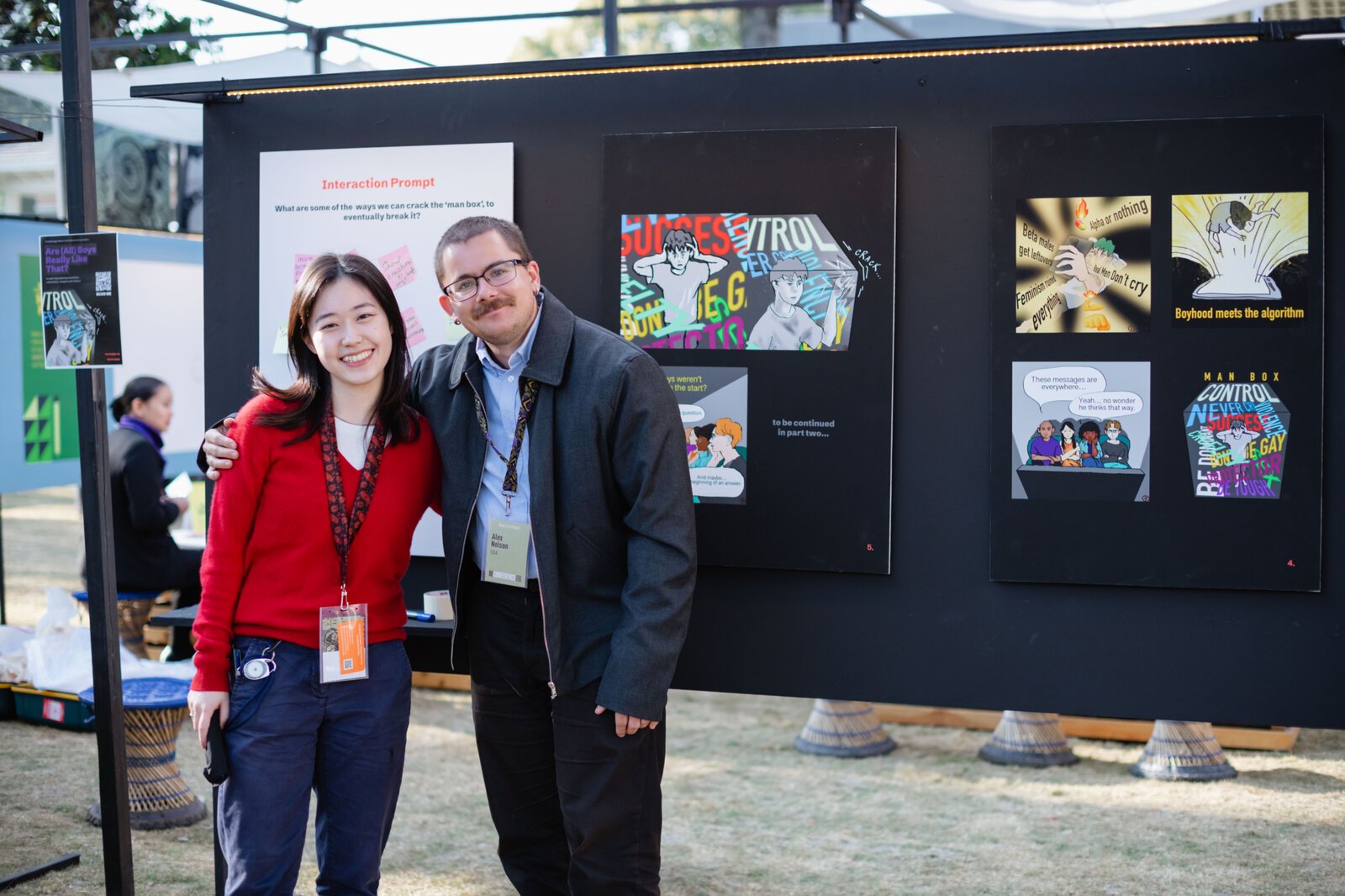

Sari Kamiyama and Alex Nelson


A group photo including MenEngage members Alex Nelson (YRG member and comic content writer), Sari Kamiyama (YRG member and comic illustrator), Yogesh Vaishnav ((Regional coordinator, MenEngage Alliance South Asia), Nyasha Sithole (Programs Officer, MenEngage Alliance), Pooja Shrestha (Vice President - Hami DajuVai), Hari Sharma (AZAD Foundation and MenEngage India Vice Chair), and Sikandar Khan (former Coordinator of MenEngage Pakistan)
Yogesh: The comic strip was presented in five panels. The first four panels had the comic strip printed out on them but the fifth was left blank as an interactive panel. People could share their thoughts using sticky notes and colored pens in this interactive panel. I found how the comic was exhibited remarkable because people could read, and on the spot share their reflections.
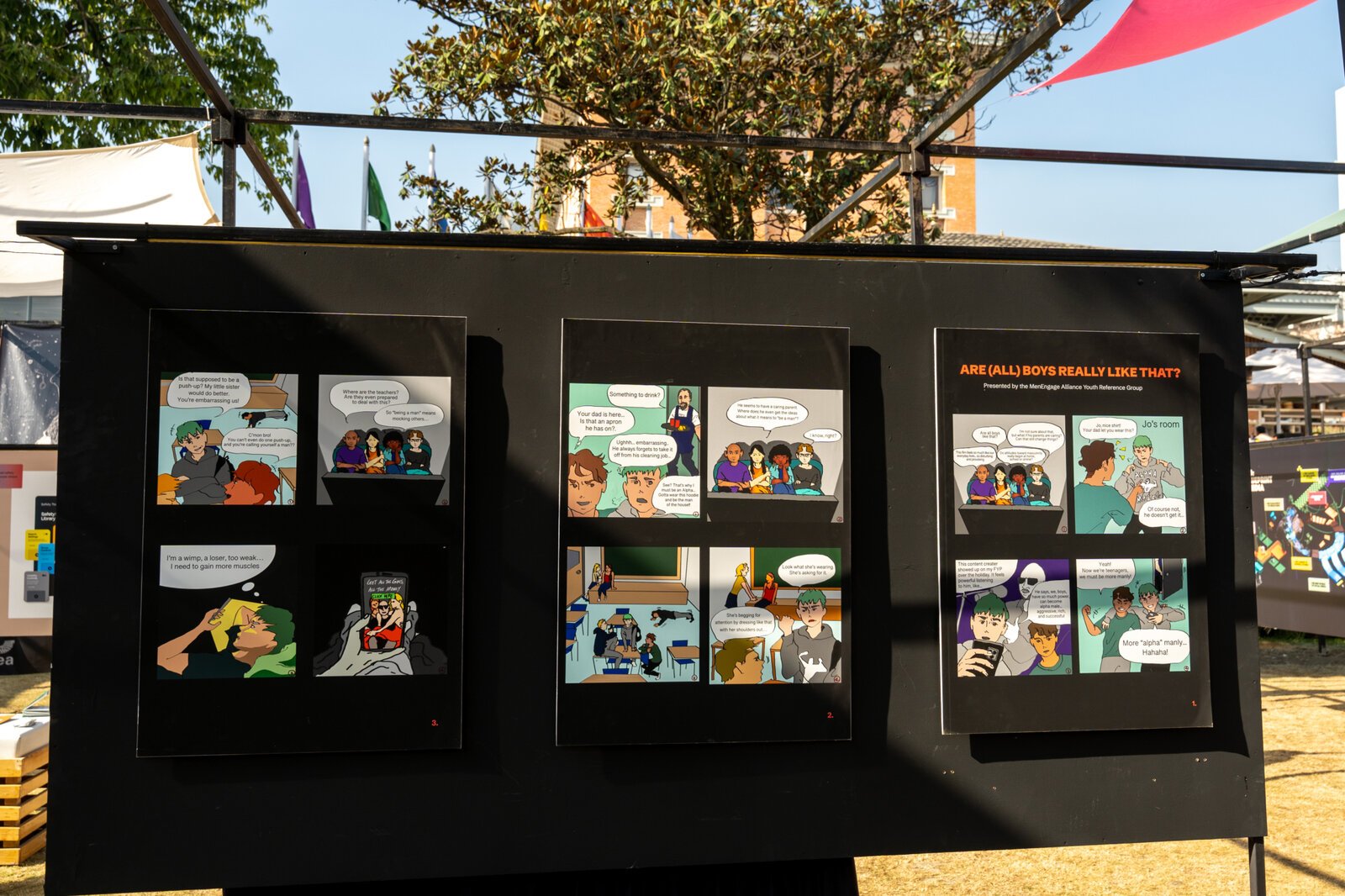
The comic strip exhibited in four panels

The interactive panel
Alex: For the discussion part, Sari and I sought to make the environment as interactive as possible so we set a large blanket down for people to gather around and share stories comfortably together. Some participants even brought popcorn to share as they sat with us! We then entered into so many lively discussions with other artists and activists from all over the globe.
In the beginning, I introduced the comic project and our collaborative process. Sari then shared her artistic intentions. She explained the rationale for rendering Jo as racially ambiguous, the symbolic meanings behind the emojis, and other stylistic points. We had an open dialogue soon after. I was happy that we strategized our advocacy efforts and got to know each others’ work on a deeper level.
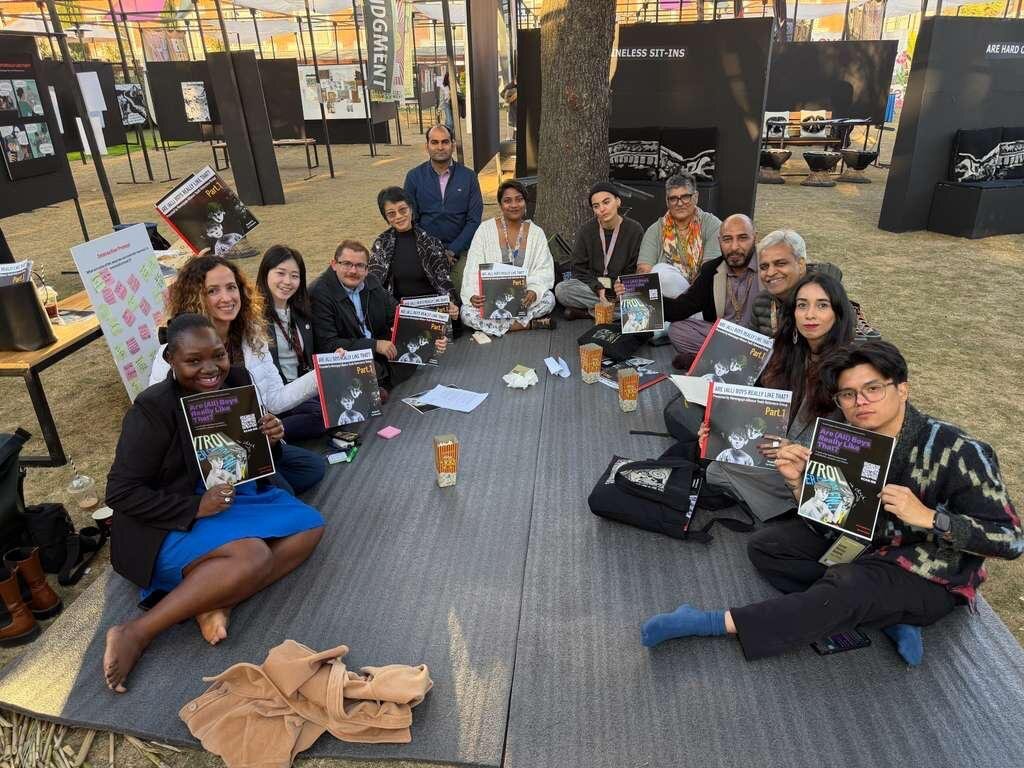
Discussing the comic strip
What are some conversations that arose?
Alex: Participants of our interactive session had plenty to share after engaging with the comic. One of the core themes of the comic is the radicalisation of adolescent boys into misogyny by the ‘manosphere’ — online spaces which promote narrow ideas about what it means to be a man and glorify misogyny and violence against women and gender diverse people. We unpacked what the ‘manosphere’ is, how it manifests globally, and how it shows up in the comic.
Sari: The conversation also included sharing about how to work with boys and men for gender justice from multiple contexts, for example by linking participants’ different passions, professions, and cultural contexts.
In particular, contributions from participants who are raising a 5 ‑year-old boy stood out, emphasizing the importance of teaching about gender equality from an early age with messages affirming that boys do not have to live within restrictive gender norms.
Yogesh: It was a great experience seeing young people lead the whole discussion.The comic sparked a rich discussion about how masculinity is understood in today’s world from different contexts i.e different ages, regional and cultural backgrounds, genders, and sexualities. We talked about how patriarchal and colonial mindsets and systems shape harmful norms in our own families, workplaces, and communities.
How did engaging with the comic strip appear to spark interest or shift perspectives on masculinities among the attendees?
Sari: I found the comic to be an accessible and effective tool for initiating conversations about masculinity. During the exhibition, a family staying at a nearby hotel stopped by the exhibition and their 15-year-old son who had not yet learned much about how gender shapes our lives showed interest in the comic, describing it as “interesting.” This moment highlighted the comic’s potential to reach people who might not usually engage with discussions on masculinity or gender norms. In fact, maybe those who are often considered “uninterested” could be the audience we most need to reach.
Alex: Many participants were excited to learn and hear about our work as MenEngage Alliance as much as they were excited about the comic. Participants affirmed that there is an increasing need to engage men and boys for gender equality and reflected on ways to collaborate towards this.
Sari and I had a conversation with a disability rights activist who made me think more about the intersections between disability justice and gender justice, and how ableism can be a product of systemic patriarchy. For example, patriarchal views connect “strength” and “independence,” defined by non-disabled male norms, to productivity, marginalizing those who need interdependence or support.
Yogesh: Many participants at reConference already had some understanding of masculinity especially because most of them work in the gender justice field. The comic strip helped bring participants’ existing knowledge into a more reflective space. Instead of speaking only in theory, we connected the concept of masculinity with real-life experiences such as those portrayed in the comic.
There was a shared recognition that harmful social norms around masculinity often encourage emotional suppression, dominance, and insensitivity. Participants acknowledged that these norms do not only affect boys and men, but also have a wider impact on families and communities. The visual storytelling in the comic helped make these patterns visible and relatable.
Many attendees — young people, activists, and practitioners — also emphasized the importance of engaging boys from an early age. They agreed that if we want long-term transformation, we need to work with children and adolescents to question rigid gender norms and promote healthier, more equitable forms of masculinity. The comic format made this conversation more open, accessible, and solution-oriented.
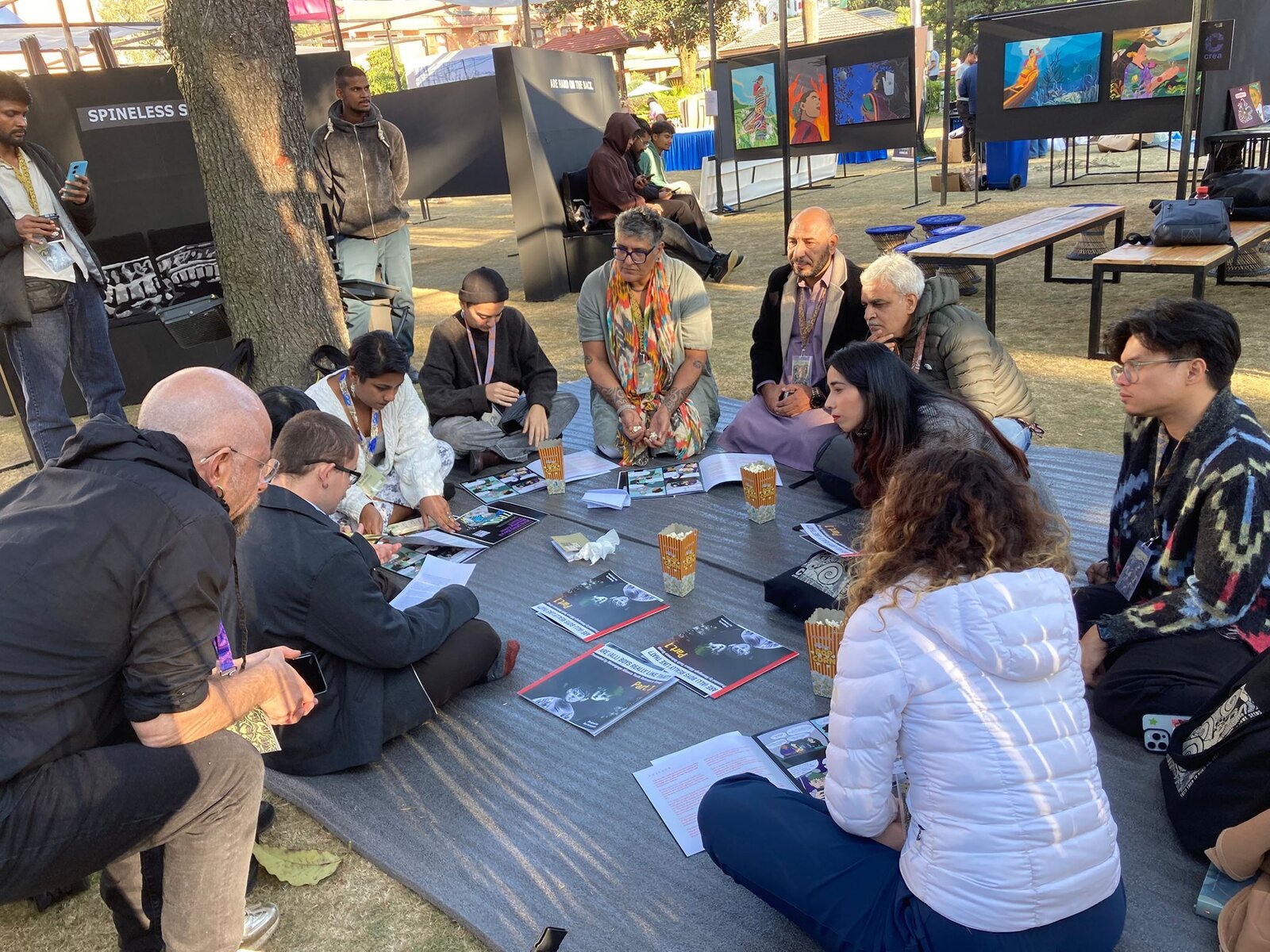
Discussing the comic strip
How did presenting the comic strip at the reConference contribute to broadening or challenging the public conversation about men, boys, and gender justice?
Alex: Through engaging with the comic and learning about MenEngage Alliance, some participants were pleasantly surprised that feminist initiatives that bring in men and boys to the struggle for gender justice exist. This sparked conversations about what this could look like in their own organizations. When sharing about MenEngage Alliance, I emphasized the importance of the MenEngage Alliance Accountability Framework in aligning our work to engage men and boys with women’s rights, LGBTIQ rights, gender and climate justice.
Sari: Presenting the comic at reConference, a space for feminist storytelling and movement-building, prompted me to reflect on questions that often arise in the work to engage men and boys for gender justice. I was curious to learn about how masculinity would be discussed at the event. Critiques of ‘toxic masculinity,’ and calls for ‘new masculinities’ were common among participants. We got to share about MenEngage’s approaches and to highlight how engaging men and boys for gender equality and transformation is an essential part of working for broader social change. We added to discussions on masculinity that framing men as accountable partners and agents of change can foster a more multidimensional conversation on gender justice.
Yogesh: The comic panels had a strong and unique presence that drew people in. The visual and interactive nature of the presentation invited participation without pressure and made complex issues around masculinity easier to approach. It was inspiring to see how quickly people engaged with it.
While we cannot claim major transformation in a short period, the comic definitely created curiosity and reflection around themes highlighted in it. It encouraged attendees to think more critically about masculinity and how ‘the man box’ impacts our lives, relationships, and communities.
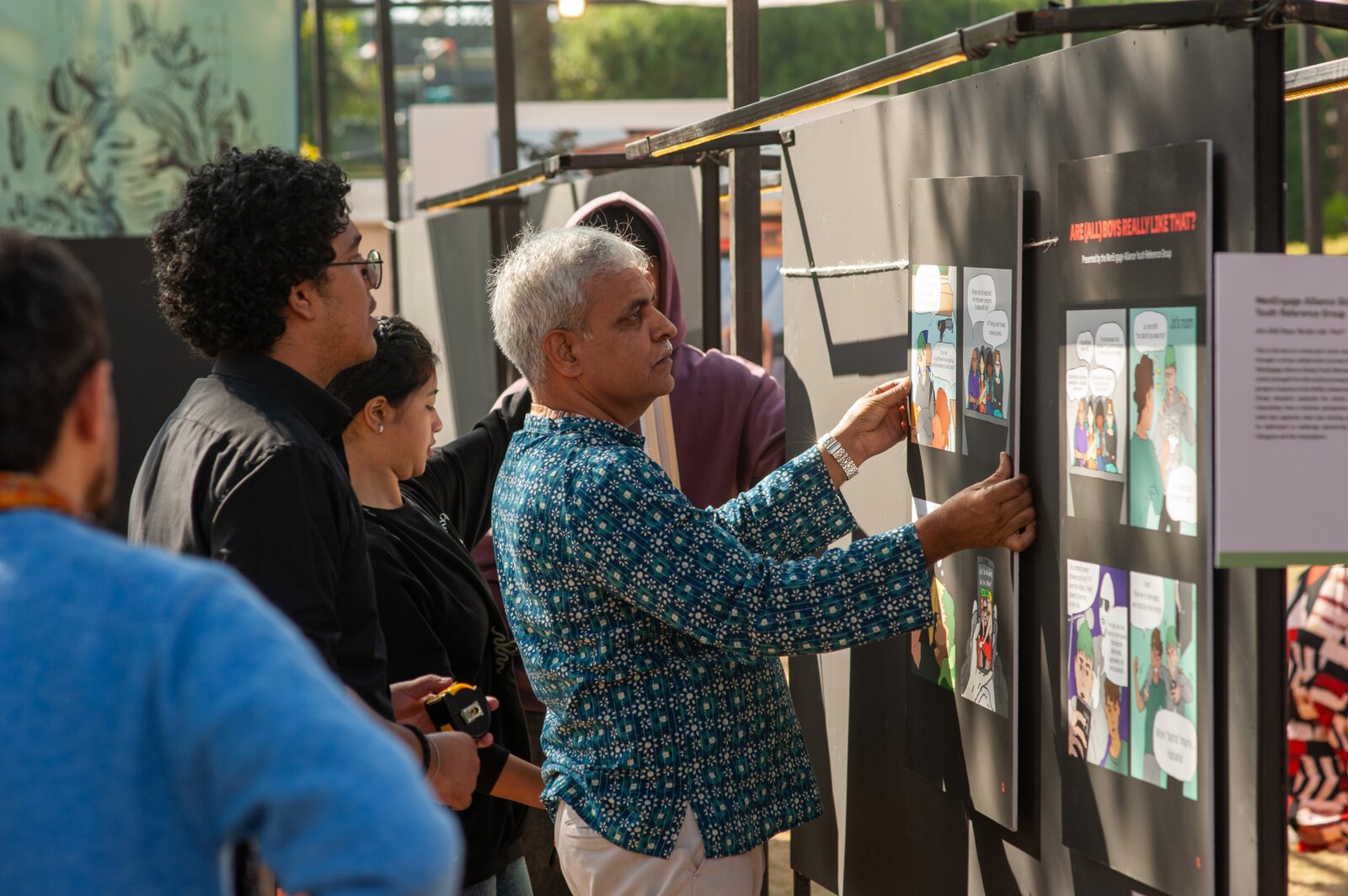

Yogesh Vaishnav holding one of the panels
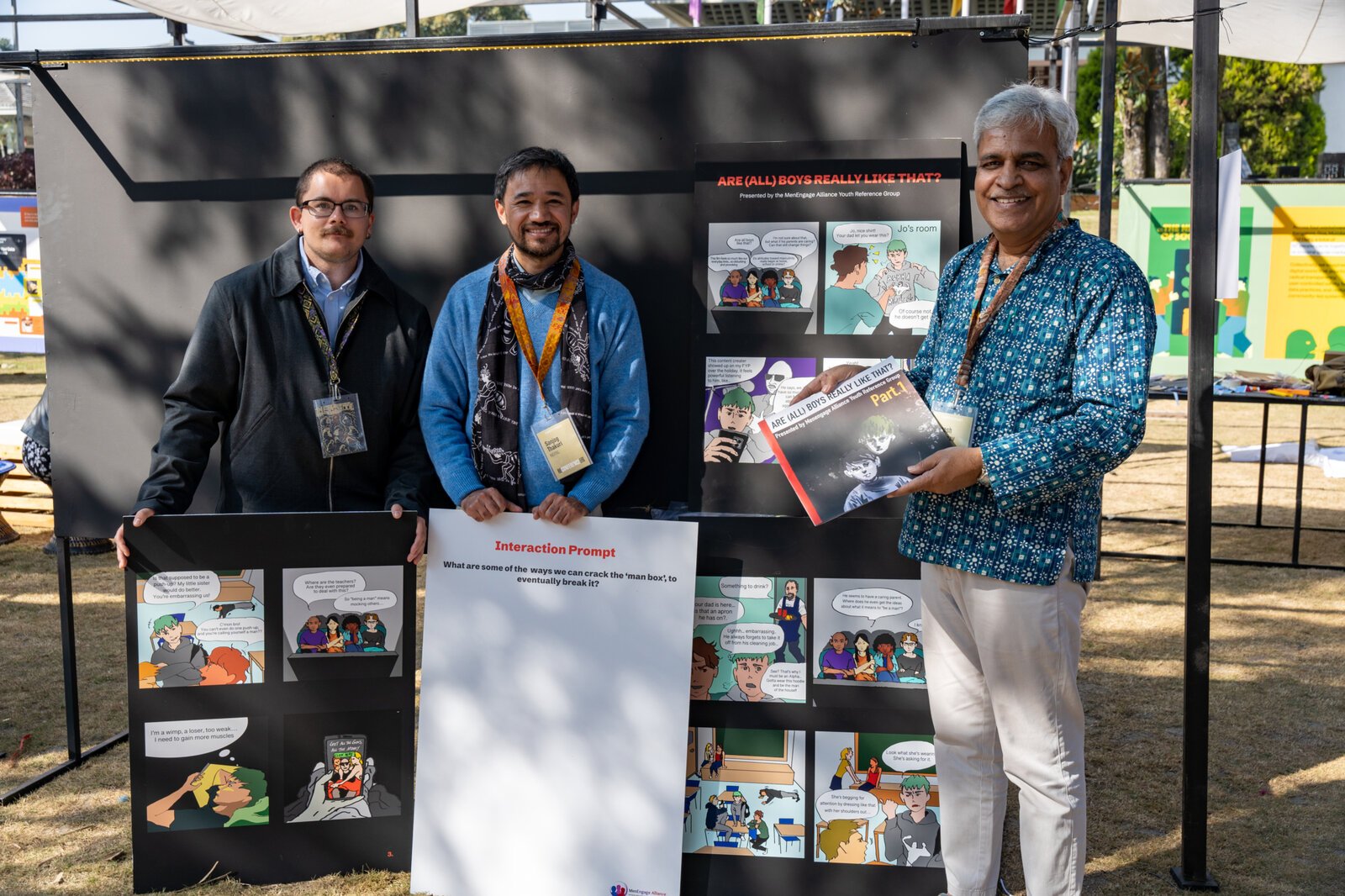
Alex Nelson (YRG member and Comic content writer), Sanjog Thakuri (Member of MenEngage Nepal Network) and Yogesh Vaishnav (Regional coordinator, MenEngage Alliance South Asia)
How was the comic strip received?
Sari: The comic was received with much positivity. Many people expressed interest in using it within their own contexts and organizations, and several participants offered to support translation efforts — it would be great to activate these connections. I hope to maintain communication with those who offered to support translation, so as to enable wider dissemination as we develop the second and third installments of the comic series.
Alex: The comic was received very well, with participants expressing genuine curiosity and active engagement with the interactive panel. There was a critique in which a participant highlighted the importance of keeping in mind the “changing landscape” of language and context. For instance, the use of slang that young people use shifts according to culture and context and the meanings behind certain phrases can vary between generations.
Yogesh: The comic strip was received very positively. Several participants expressed interest in using the comic as a tool in their own spaces — such as with children, young people, families, teams, and networks. They appreciated that it was simple, relatable, and discussion-oriented.
One important suggestion that came up was the need for translation into different languages to reach a wider and more diverse audience. Some also felt that future editions could include more varied contexts or stories to reflect different social locations and experiences. I found these reflections useful to take into consideration when developing the next parts of the comic series and strengthening similar creative tools in our field.
Did this opportunity lead to new connections, partnerships, or collaborative ideas with others?
Yogesh: Yes, this opportunity helped me connect with people beyond the MenEngage Alliance network. I met many feminist allies and practitioners who are working on gender justice using different approaches. ReConference created space for meaningful exchanges and helped build relationships based on shared values.
I connected with participants from South Asian countries such as Pakistan, Bangladesh, and India who were interested in learning more about the MenEngage Alliance, especially our approach to working with boys and men and transforming patriarchal masculinities within a feminist framework.
Initiatives like this are very important for our work. They help expand networks, strengthen solidarity across movements, and create opportunities to learn from diverse experiences. They also increase the visibility of our approach and encourage partnerships that can support collective action for gender justice.
Sari: Yes, many new connections emerged. The art conference served as an entry point for many to learn about the MenEngage Alliance, with some participants even expressing interest in becoming member organizations.
Alex: We established meaningful connections that would be good to follow up on for future collaboration with the Youth Reference Group. The connections included those who were interested in translating the comic into various languages, and with participants from feminist disability justice organizations.
What is a highlight moment or a takeaway from reConference?
Alex: It was an absolute privilege to learn from feminist leaders that center Global South perspectives. The event made me think critically about the power dynamics and accountability practices that are crucial for me to be conscious of as a gender justice advocate from the Global North.
Sari: I was profoundly moved by presentations by artists like Alok Vaid-Menon and Arundhati Roy, which allowed me to viscerally experience the power and energy of feminist movements in the Global South.
Yogesh: One of the biggest takeaways for me from reConference was the strong sense of inclusion. I could see inclusion reflected at every level — in the speakers, the participants, the themes, and in the way activities were designed.
The conference created a comfortable and safe space for us to express ourselves. People from different backgrounds, identities, and experiences were not only present but actively heard and valued. That commitment to inclusion was truly inspiring for me and is something I will carry forward in my own work.