
MenEngage Latin America Focal Points work towards regional roadmap at Mexico meeting

- Published On
- 13 May 2026
- Published By
- Latin America
- Reading Time
- 4 minutes
- Resource Type
- Update
Focal points from 13 national MenEngage Networks met in Querétaro, Mexico, from 19 to 21 April 2026, for a moment of stock-taking and priority-setting for the MenEngage Latin America network
Convened alongside the 9th International Colloquium on Men and Masculinities Studies in Queretaro, Mexico, from April 19 to 21, 2026, the meeting of MenEngage country focal points was a moment to step back and unpack the work on men and masculinities in the Latin America region, with a particular focus on militarised masculinities and armed conflict.
Focal points from 13 national MenEngage Networks met in Querétaro, Mexico, from 19 to 21 April 2026, for a moment of stock-taking and priority-setting for the MenEngage Latin America network. Alongside MenEngage country representatives from the region, the meeting welcomed special guest Lucía González Duque, former Truth Commissioner in Colombia, for a keynote address, and Joni van de Sand, Co-Director of the MenEngage Global Secretariat.
The meeting had six main objectives:
- To analyse the regional political context for work with men and boys
- To review and provide feedback on the Networking Manual (MELA Toolkit)
- To define regional strategic priorities for 2026 – 2027
- To present, discuss, and sign the updated MenEngage Alliance protocols
- To elect the new Regional Co-Coordinator
- To establish concrete institutional commitments for the current period
Analysis of the regional political context: Masculinities and war
During her keynote address, Lucía González Duque analysed the connections between masculinities, armed conflict, and peacebuilding. Her intervention located work with men and boys within broader structures of violence, highlighting how dominant ideas of masculinity can sustain cycles of conflict, and how alternative masculinities can contribute to reconciliation, democracy, and justice.
The discussion among the MenEngage country focal points reflected on regional dynamics in Latin America, including the rise of right-wing masculinisms, the growth of the manosphere [“machosfera”], and the need to situate masculinities work within broader struggles for human rights and democratic governance.
The space was created to unpack the current context for working with men and boys in Latin America. Participants explored the political, social, and institutional dynamics shaping the region, identifying key threats and opportunities:
Threats identified
- The rise of right-wing governments and movements with masculinist, antifeminist, and anti-diversity rhetoric in several countries of the region.
- The growth of the manosphere and toxic opinion leaders with a strong influence on young men and adolescents.
- The closure of civic spaces and the cancellation of the legal status of social and feminist organizations.
- The reduction of international cooperation and the shrinking of funds available for masculinity work in the region.
- “The co-opting of the language of masculinity by conservative actors and ‘mercenaries of masculinity’ — individuals, groups, or influencers who use masculinity discourse opportunistically for political, ideological, or commercial purposes while stripping it of its transformative and gender-justice content.”
Opportunities identified:
- Growing social awareness of the link between masculinities and violence, especially among younger generations.
- Strengthening of feminist movements and intersectional alliances that challenge men as agents of change.
- MenEngage Latin America’s Network (MELA) brings more than 10 years of experience in building regional networks, developing context-specific methodologies, and producing knowledge rooted in Latin American realities, providing a strong foundation for credibility, continuity, and more effective regional action on masculinities.
- The MenEngage Global Secretariat’s willingness to direct resources and technical support to the regions.
- National and international regulatory frameworks that offer levers for political advocacy in health, care, and violence.
- The Core Principles document, the Code of Conduct, and the Accountability Standards were positively assessed as tools for political and ideological positioning.
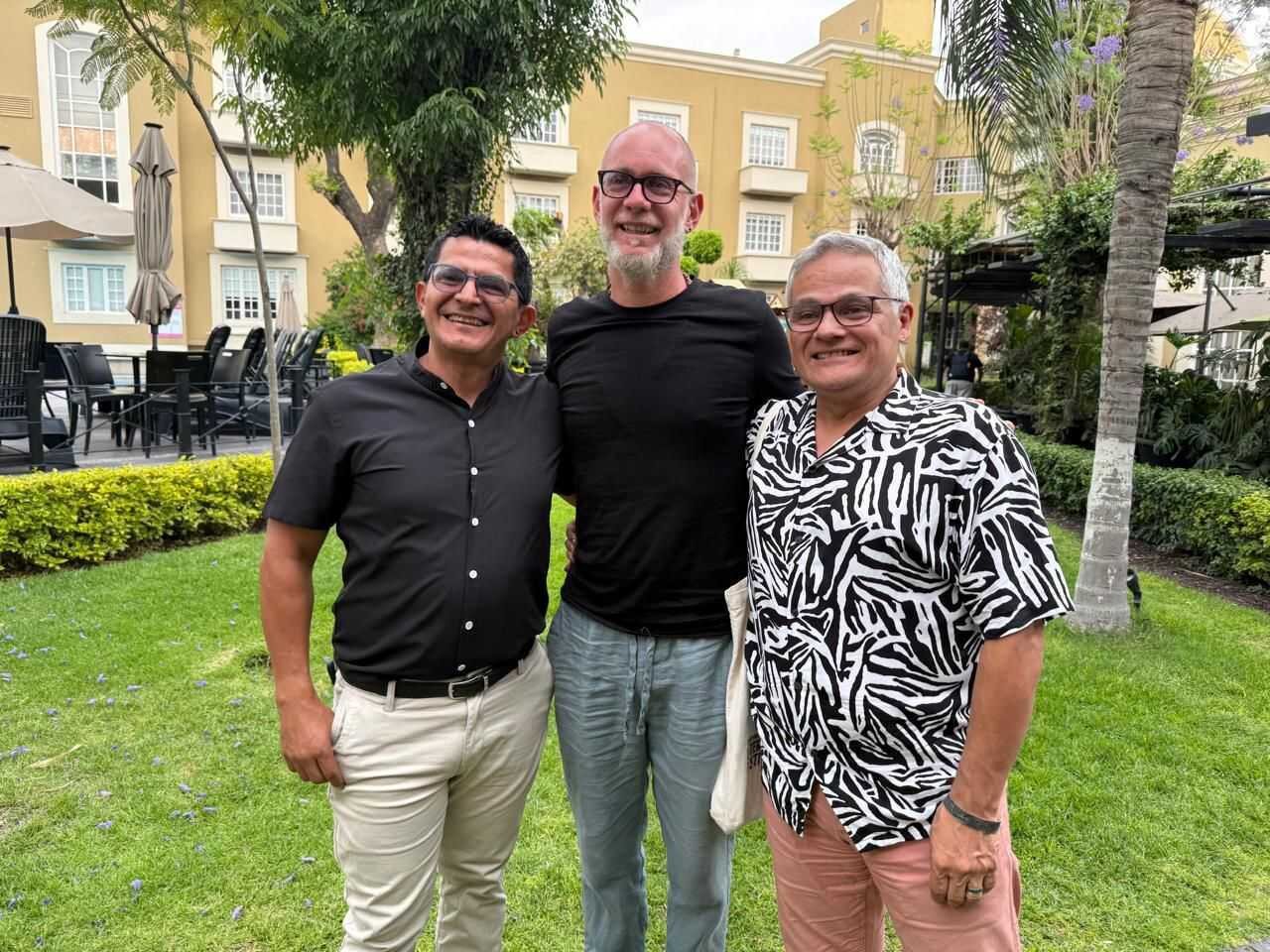
The MenEngage Latin America co-coordinators: Douglas Mendoza, Nicaragua (left); Luciano Fabbri, Argentina – elected at the meeting (centre); and Hernando Muñoz, Colombia – leaving the post (right)
Agreements and priority actions
It was agreed that the MenEngage Alliance Core Principles remain a key political reference for the regional network, including commitments to intersectional feminism, human rights for all people, the eradication of patriarchy, and the recognition of diverse gender and sexual identities and expressions. While open to further contextualization, these frameworks were considered the strongest shared political foundation of MenEngage Alliance and an important reference point for positioning the network in relation to conservative and masculinist actors.
The group agreed to develop a MenEngage Latin America Network (MELA) regional tool on the creation and strengthening of masculinities networks. This document will be based on the accumulated history and experiences of national networks across the region.
For 2026, the group agreed to develop a coordinated regional campaign on masculinities, mental health, and public policy, grounded in an intersectional gender perspective. The group further highlighted the importance of strengthening diversity within the region’s coordination structures in the coming period.
This includes integrating a stronger gender perspective, increasing the participation and leadership of women across the network, and ensuring meaningful representation of young people in decision-making spaces. To this end, the group will initiate a training and mentoring process for young people in national networks, with virtual sessions throughout 2026.
A democratic election was held for the Co-Coordinator role of the network. From June 2026, Luciano (Lucho) Fabbri (Argentina) will join Douglas Mendoza (Nicaragua), thanking Hernando Muñoz (Colombia) for his service to the network in the role these past years.
The meeting concluded by reaffirming the MenEngage Latin America Network (MELA) as a learning network that continues to build on its experience across the region. It reflects on its practice, adapts its strategies, and strengthens coordination among national networks in order to respond to changing political and social contexts.
This ongoing process of learning and adaptation is central to the regional network’s ability to remain relevant and effective in advancing work on masculinities. Through this approach, the network seeks to deepen its contribution to broader efforts for social and gender justice in Latin America, while reinforcing collaboration, shared responsibility, and collective action across all member organisations.