Reasons for concern, reasons for hope: Reporting back from CSW70
- Published On
- 2 Apr 2026
- Published By
- MenEngage Alliance
- Reading Time
- 6 minutes
- Resource Type
- Update
Over its 70-year history, the Commission on the Status of Women (CSW) has become – and continues to be – a global forum for both the advancement of women’s rights as well as feminist advocacy and movement-building.
But this vital space for hosting multilateral processes is facing serious pushback.
Conservative and anti-gender actors and movements seeking to roll back hard-won commitments on women’s rights and gender equality globally.
And, this is exactly why CSW70 is a space we continue to show up at as a feminist-informed gender justice network with a men and masculinities lens.
Key ‘men and masculinities’ takeaways from CSW70
This year, MenEngage members and Global Secretariat staff from 9 countries took part in the CSW70 sessions at the UN Headquarters in New York, with others engaging online. With their insights, here are 5 key trends around men and masculinities in the space:
Backlash takes center stage at CSW70
Backlash politics have made it into the UN in stark and definitive ways as gender-based rights continue to be contested during CSW itself.
Working with men and boys remains essential
Throughout CSW we continued to hear strong calls for the need to work with men and boys as agents of change to counter the backlash and advance gender justice.
Masculinities were named as a critical factor in backlash at the highest levels
In the words of UN Secretary General, António Guterres, ‘We still live in a male-dominated world with a male-dominated culture. And gender equality is fundamentally a question of power.’ Dialogues at CSW70 unpacked the links between patriarchal masculinities and broader systemic threats, including democratic erosion, shrinking civic space, and the surge of militarism globally.
We saw the patriarchal masculinities playbook at CSW70
Led by the United States, regressive actors followed a familiar script where they prioritized power over cooperation and sought to reassert male dominance as the accepted global norm. Attacks on women’s and LGBTQI+ rights were deliberate and coordinated, showing up across several key resolutions.
When progressive voices unite, we have an impact.
Feminists advocated strongly for our governments to hold the line on women’s rights in key agreements. Efforts to weaken the agreements and delay their adoption were unsuccessful, and an attempt by the United States to scrap them altogether was rejected. The fact that these attempts to roll back at least 30 years of progress ultimately failed is a powerful reminder of why we should continue to show up in these spaces collectively.
With foundational commitments of gender equality and justice being contested, including the very definition of gender to be binary and restrictive, we leave CSW70 with the same feelings that carried us through this one: the collective determination of movements that refuse to go backwards.
7 key moments of MenEngage Alliance advocacy at CSW70

This year’s CSW focused on the issues of access to justice for women and girls. Acting in solidarity around this theme, MenEngage Alliance members took a number of joint advocacy actions:
We called for greater political will, resources and courage for gender justice in our joint Oral Statement
MenEngage Alliance, Pritha Chatterjee from Breakthrough delivered our Oral Statement in a plenary session on 15th March. She emphasised “the need for meaningful and active engagement of men and boys in dismantling patriarchal masculinities and advancing justice for all.” Watch Pritha in action here (timestamp 2:53:20).
We stood in solidarity with feminist leaders
We added our voice and support to a statement and campaign led by the Women’s Rights Caucus (WRC)—an international coalition of feminist women’s rights organisations and individuals — pushing back against efforts to undo the broad and inclusive understanding of gender. We also joined 1200 feminist organisations and individuals in calling for member states to Pay Up and Defend Democracy.
Youth voices from MenEngage Alliance led demands for justice
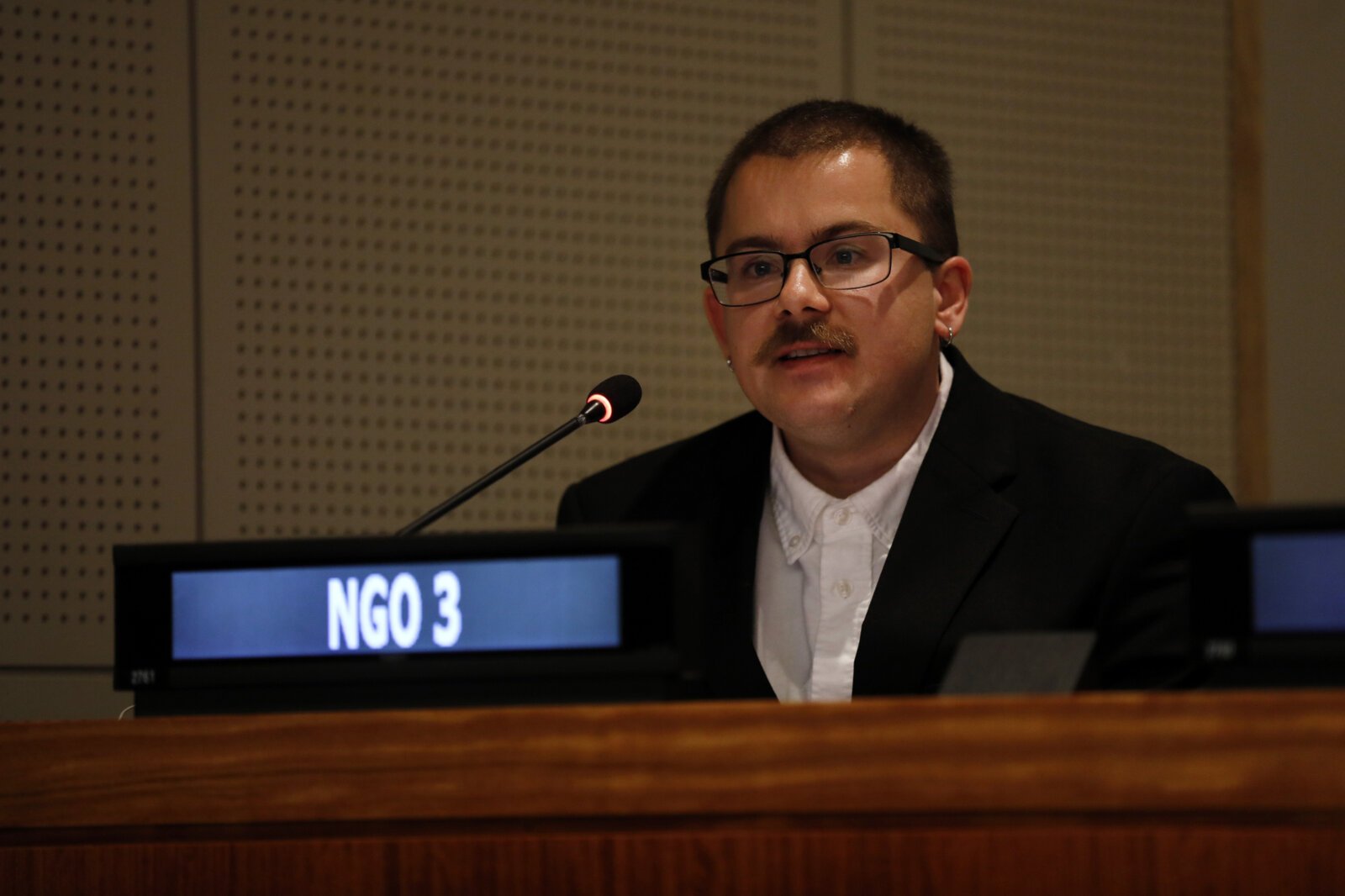
MenEngage Alliance Youth Reference Group (YRG) members took the lead in representing the Alliance in a range of activities. On behalf of the group, Alex Nelson, who is also a Board Member of the North American MenEngage Network, spoke in a youth plenary on 16th March, calling for the transformation of patriarchal systems that restrict access to justice.
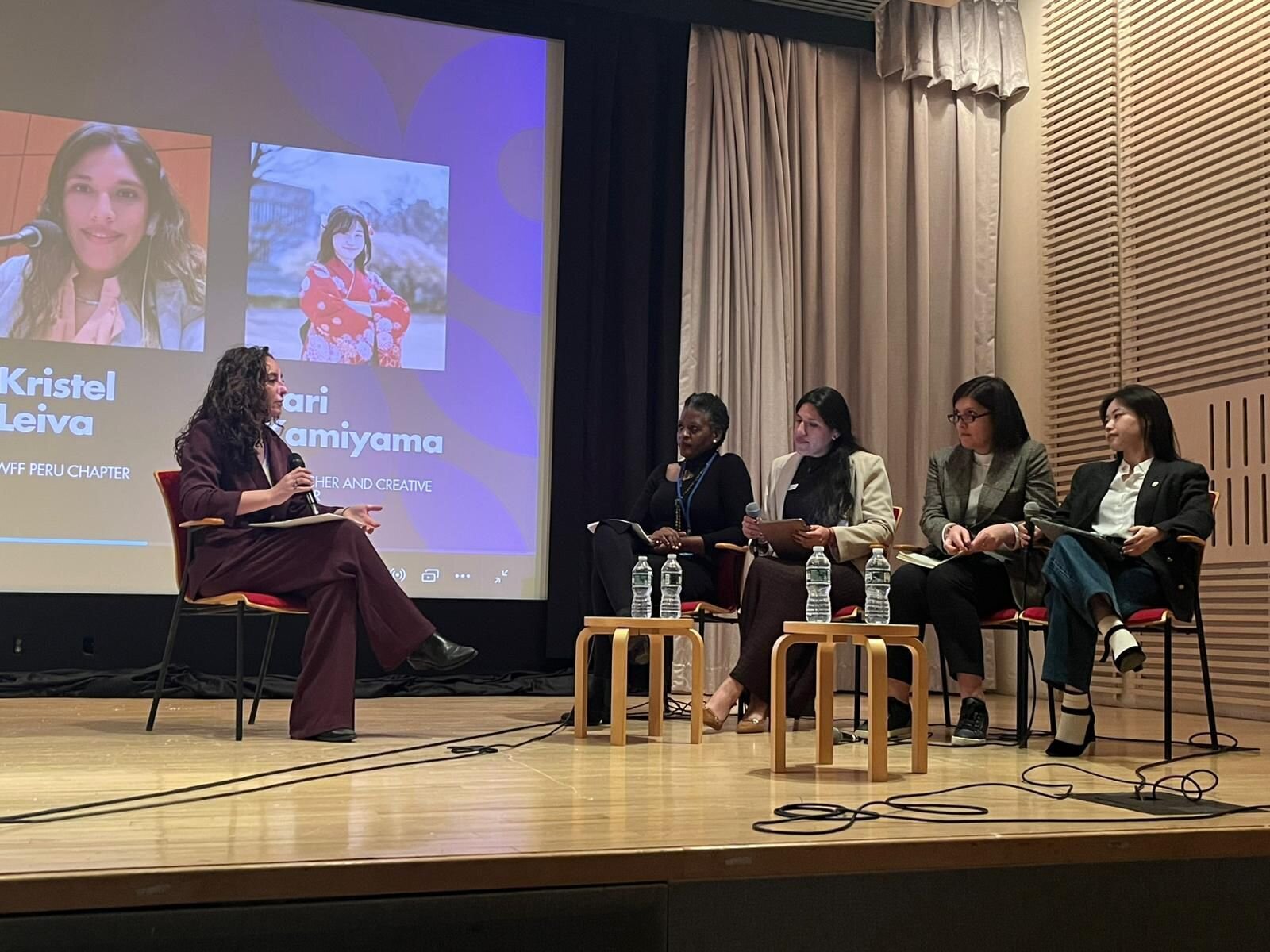
Sari Kamiyama, another member of the group, was invited to moderate a session at the Food and Agriculture Organization (FAO) World Food Forum on 11th March to share why it’s important to engage with men and boys for gender justice, and how non-traditional ways of activism, including arts and comics, can be one way of doing so.
We called out patriarchy as a built-in feature of justice systems worldwide
Collectively developed by MenEngage members via our Advocacy Working Group, our joint Written Statement to CSW70calls for systemic transformation of legal and justice systems, reforms of discriminatory laws and policies, and a shift in legal and institutional culture.
We pushed forward the agenda on addressing patriarchal masculinities across justice systems
Developed with UN Women and Bahá’í International Community, our Discussion Brief offers feminist perspectives on addressing patriarchal masculinities as part of advocacy and national-level policies on CSW70’s priority theme.
We compiled and shared knowledge for understanding and resisting backlash. We developed a curated body of resources to help advocates and activists understand key frameworks informing the work with men and boys for gender equality, and for resisting backlash.
We connected, built solidarity and strategised
Members physically taking part in CSW70 took the opportunity to strengthen the ties among us at the MenEngage CSW70 Caucus meeting. We met old friends and made new connections within the MenEngage community — creating the space for mutual support and planning how to most effectively leverage the opportunities presented by CSW70 moving forward.
As Kelly Fisher, Youth Reference Group member, reflected on what that connection meant in practice:
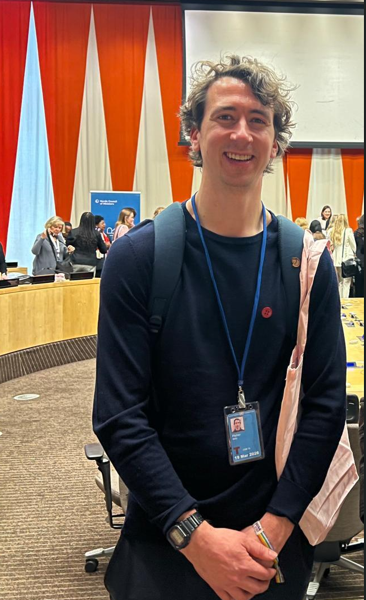
During CSW I had the chance to connect with young activists and practitioners from around the world.
At a time when we see how different actors are using a variety of tactics, especially in online spaces, to promote harmful ideas of masculinity and mobilize backlash against gender equality, it was inspiring to learn how other are addressing these issues. I look forward to taking these learnings back to my own work.
Putting masculinities on the agenda across key events
MenEngage Alliance showed up at CSW70 not only in the halls of negotiation but in the spaces where practitioners, activists, and advocates gather.
Across a range of events we organized, co-organized, and participated in, masculinities were front and center — as a lens for understanding backlash, a framework for transforming power, and a site of urgent political work. Below is a snapshot of some of those moments.
Progressive policy approaches to engage men and boys in gender equality
This high-level side event quickly reached capacity, with over 50 CSW70 delegates eager to hear strategic insights from a panel convened by the Men, Masculinities, and Countering Backlash Collective, convened by MenEngage and other partners.
The discussion, facilitated by Joni van de Sand, Global Co-Director of MenEngage Alliance, highlighted that countering backlash requires a shift in scale and strategy.
It has never been more important to scale the work that is being done. A lot of the work that organizations are doing on engaging men and boys and transforming masculinities remains very small-scale, very short-term.
Collaboration is absolutely key because there is a risk that we are losing a younger generation of men in the struggle for gender equality.
(Anonymous — Chatham House Rules)
Global trends and strategic responses to anti-Feminist and anti-Rights backlash
Friedrich-Ebert-Stiftung (FES) and UNRISD, in collaboration with the MenEngage Alliance, brought together key actors in an official side-event on 9th of March to examine the growing backlash against gender equality.
laxman belbase, Global Co-Director of MenEngage Alliance, highlighted that masculinities and patriarchy operate as root causes of men’s anxiety and as political tools, with anti-gender actors mobilizing these ideals to reinforce conventional social norms while framing gender equality as a threat to their existence.
Read the key takeaway on social media here and the full speech by laxman belbase here.
Reframing masculinities: shifting power, delivering justice
Azad Foundation and MenEngage India brought together grassroots activists, male allies, and other experts in the field to address the urgent need to transform patriarchal masculinities that block women’s access to justice.

This parallel event also provided opportunities to reflect on practical experiences. Hari Sharma from Azad Foundation shared insights based on his work in India, emphasizing the need to engage men to create supportive environments for women to work in non-traditional professions, usually dominated by men, thereby changing gender dynamics.
Han Lee, who participated from the MenEngage Korea (K‑MEN) Network and is an activist with Feminism with Him, shared:
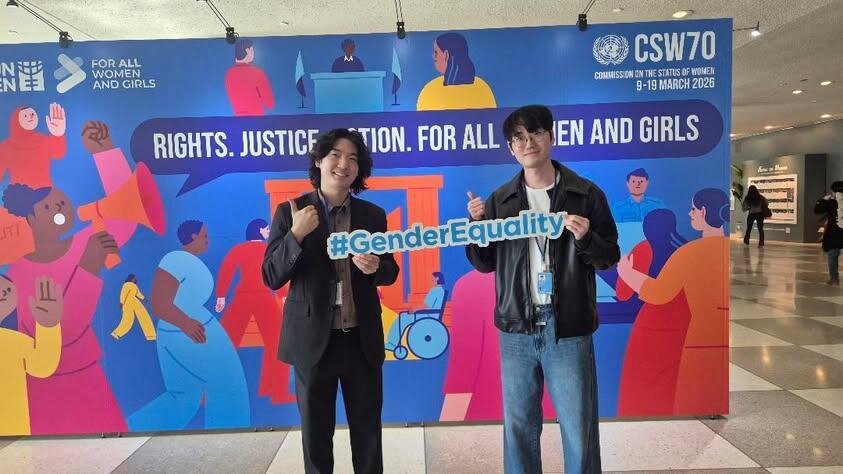
To connect with boys and men, our language must be concrete and grounded in their realities. Presenting alternative narratives of masculinity and meaningful role models is key to translating gender equality from law into practice.
Reimagining care in India: engaging men, advancing equity
Organized by ICRW on 17th March 2026, “Reimagining Care in India: Engaging Men, Advancing Equity”, participants joined from across the globe to collectively rethink pathways to build more gender-equitable care systems.
The session explored how engaging men can help redistribute care responsibilities and challenge gender stereotypes in households and communities. The session explored ways to engage men and boys in equitable care work, highlighting enablers, barriers, and promising evidence of change.
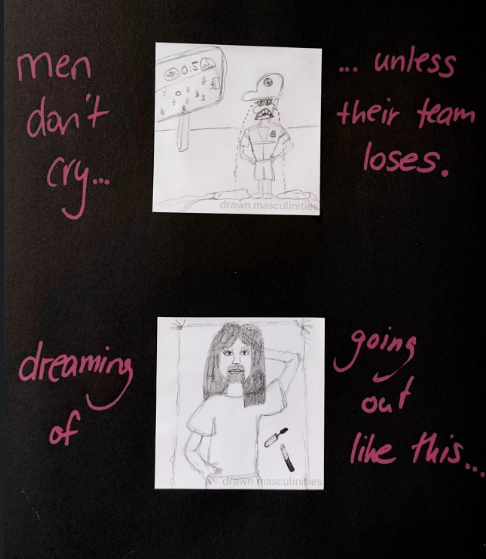
Drawn masculinities workshop
The “Drawn Masculinities” workshop held on 13th March was led by Dag Schoelper (Bundesforum Männer) and facilitated by Sari Kamiyama (MenEngage Alliance Youth Reference Group Member).