
Masculinity remains the unnamed force shaping global leadership and holding back social justice

- Published On
- 5 Oct 2026
- Published By
- MenEngage Alliance
- Reading Time
- 5 minutes
- Resource Type
- Op-ed
Opinion Editorial by Shamah Bulangis, Advocacy Officer, MenEngage Alliance
The recent 81st United Nations General Assembly (UNGA81) saw the mostly-male roster of world leaders line up to give their take on the most pressing geopolitical issues. While national interests dictated the agenda, many speeches revealed a deeper, unspoken theme: ‘strongman’ rhetoric a masculine performance of power.
We were on the ground in New York throughout, tracking how masculinity — whether named explicitly or not — showed up in the space and discussions. In this post, we examine its presence across 197 keynote speeches delivered by UN and world leaders to the General Debate.
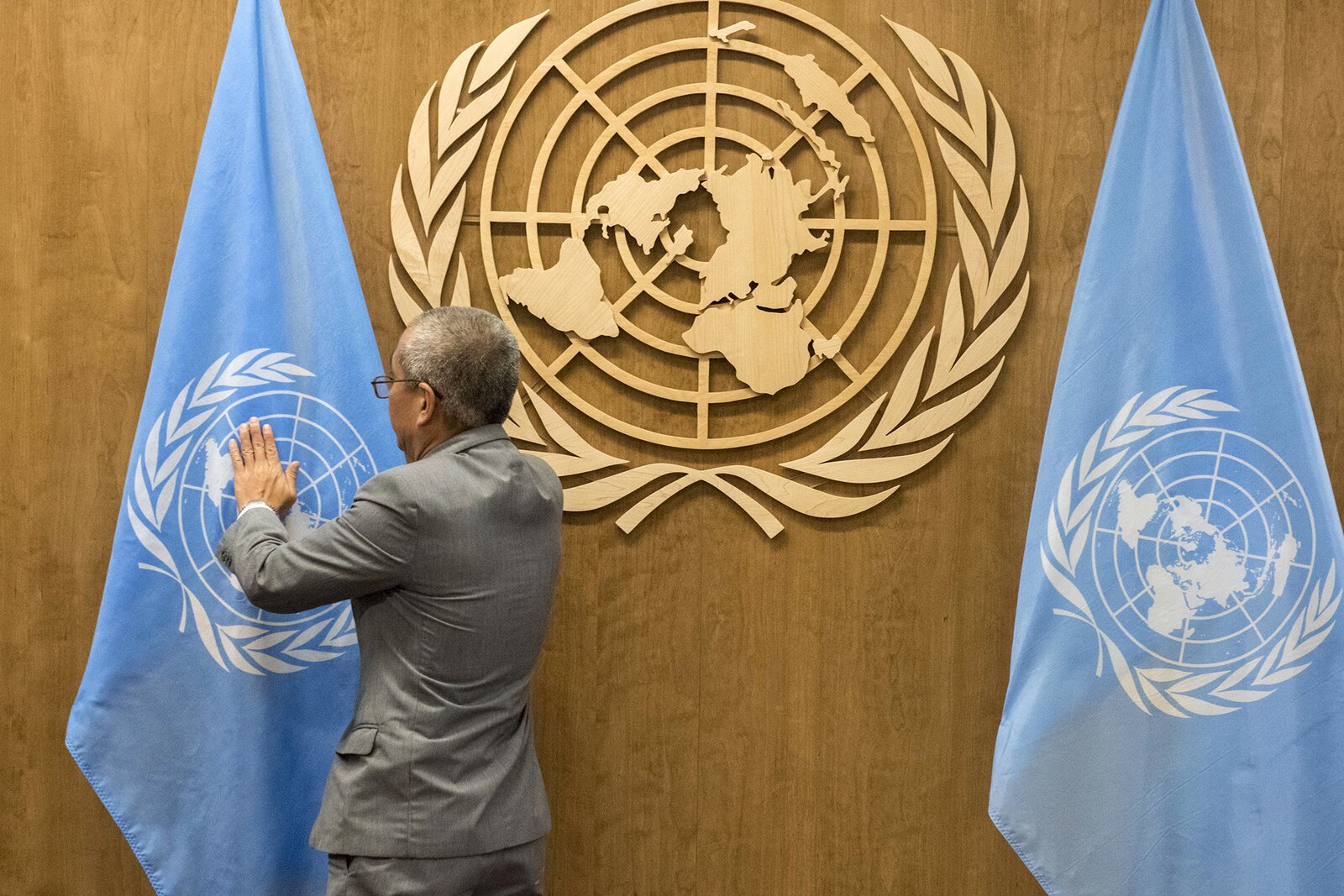
Photo credit: UN Photo/Kim Haughton
Masculinity and ‘might is right’ politics
Masculinity was not mentioned in any of the 197 keynote speeches. Yet nothing was more present in the UN General Assembly hall than a particular idea of manhood as multiple world leaders from around the world sought to project a masculine image backed by a ‘might is right’ mindset.
And ‘might’ occupied a large share of the agenda, given the state of international conflicts at this moment in history. Rather than taking a conciliatory tone, many world leaders leaned into a ‘warrior and protector’ rhetoric, speaking to “courage and strength to defend” and being “unflinching in defending our people”. Israeli Prime Minister, Benjamin Netanyahu built a narrative around fathers, sons and soldier-brothers, retelling how he found his paratrooper brother before his death.
The rhetoric betrays the underlying truth of an entrenched patriarchal mindset and a distinctly ‘masculine’ style of power. Yet when a head of state promises strength, we categorize it as security. When a leader invokes fathers and fallen brothers, we read it as passion. When an envoy vows that military goals will be met, we treat it as geopolitics. But all of these are gendered performances from a particular script: the male protector, warrior, patriot, and hero enacting a national destiny.
Entirely without irony, militarized masculinity provided the unspoken grammar for a performance delivered on the world’s premier stage for peace and cooperation.
Worryingly, but unsurprisingly, the same narrative framework continues to be deployed against gender justice. Many leaders reiterated well-worn lines that position equality and LGBTQI+ rights as existential threats to the traditional family unit.
Poland’s President called for policies that protect “the family, mother and father”, signalling a patriarchal and heteronormative template for what a family should look like while promoting childbirth over protections for abortion access.
Turkey’s leadership took a similar line, comparing gender policies to a “siege” that is targeting innocent children and the family institution. Meanwhile, Peru blames an “ideological cultural agenda” for disorder in classrooms and calls to “re-establish the principle of respect for authority.”
These are not isolated threats. Within the UN, a conservative bloc routinely attacks gender equality as a dangerous ‘ideology’. Indeed, they are coordinating more than ever around anti-gender policy and ‘family’ narratives. To this end, UNGA81 saw the public launch of a new coalition — positioned around the anti-abortion 2020 ‘Geneva Consensus Declaration’ — led by the USA and involving more than 60 governments around the world.
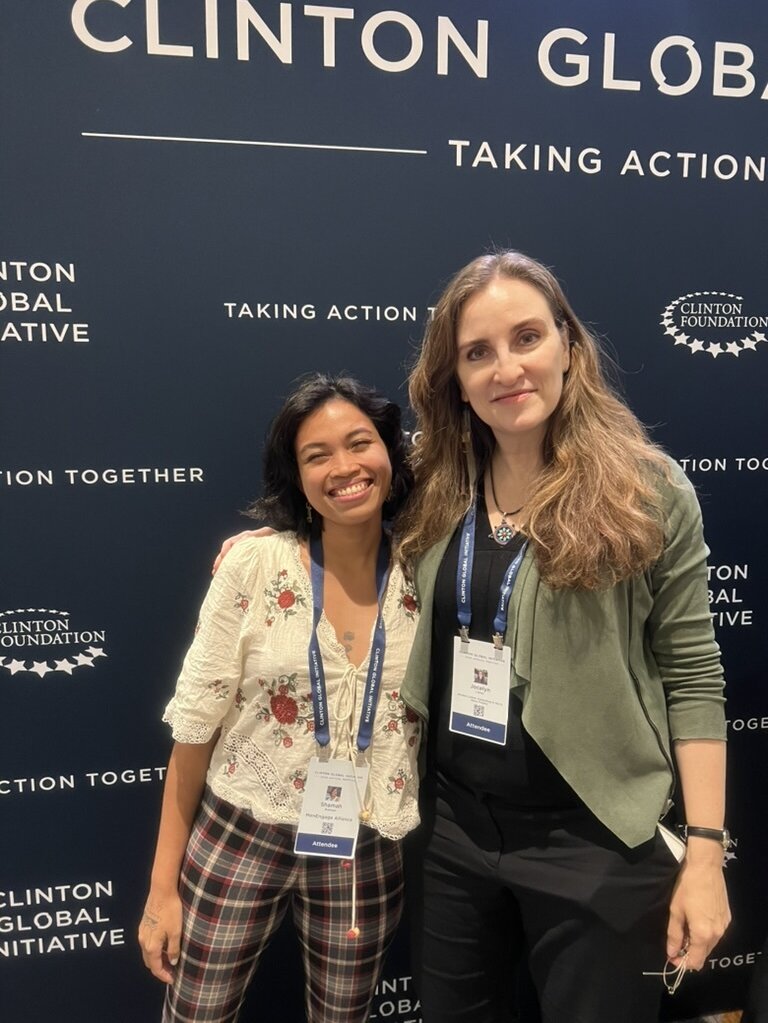

Shamah Bulangis, MenEngage Global Secretariat and Jocelyn Lehrer, Men's Story Project and member of MenEngage at an event organised by Clinton Global Initiative


laxman belbase, MenEngage Alliance co-director, speaking at the UNGA81 side event on the Melbourne Declaration, organised by Women Deliver
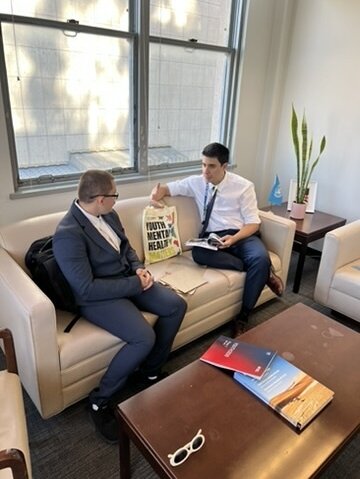

Felipe Paullier, Assistant Secretary-General for Youth Affairs, meets with Alex Nelson, member of North America MenEngage Network
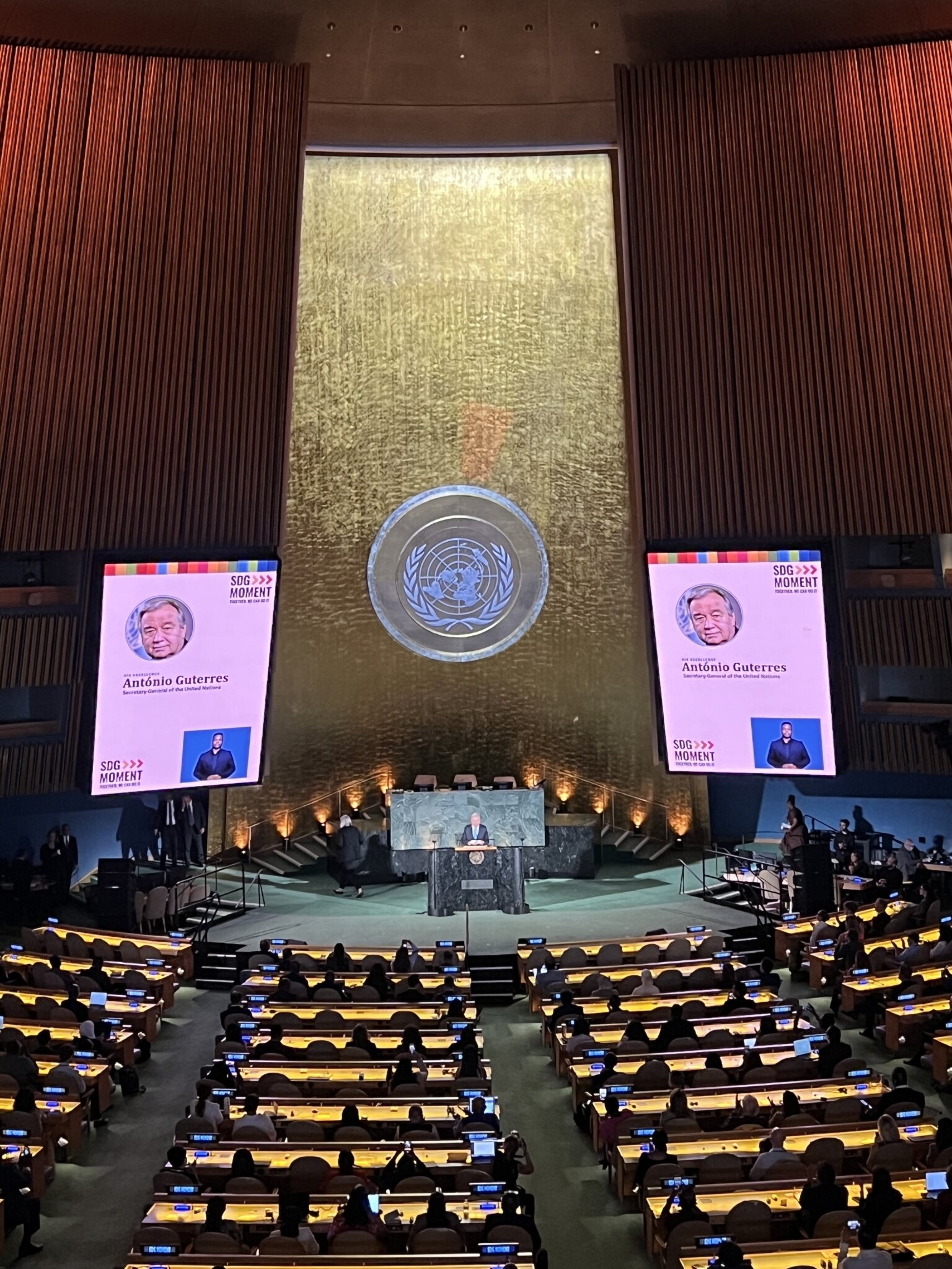
MenEngage's Shamah Bulangis attended the UN's SDG Moment event, with a keynote address by UN Secretary General, Antonio Guterres
Gender still seen as a ‘women’s issue’
When leaders spoke to issues of gender at UNGA81 — and many did — it was generally in the context of women and girls as victims to be defended or marginalised groups to be empowered.
The absence of men and boys from the gender conversation is not neutral. It maintains the frame of ‘gender’ as “women’s issues”. Men’s responsibilities, roles, and accountability are erased from the agenda.
Indeed, of the 46 percent of speeches that mentioned women and girls, none mentioned the need to work with men and boys or to work with people of all genders to challenge gendered norms.
Speakers deplored conflict-related sexual violence — in the Democratic Republic of the Congo, in Sudan, in Ukraine — without asking what forms of manhood are condoned, armed and emboldened to commit it.
Yet the absence of ‘men and boys’ from these high-level speeches can also be counted as a minor win, in that we did not hear any leaders pushing a narrative that men and boys are the victims of feminism.
Nonetheless, we remain a long way from mainstream high-level discourse acknowledging men as gendered actors, as bearers of privilege, as agents of change, or people whose socialisation should be a policy question.
Performance, not biology
The podium itself told a predictable story. Of the 197 statements delivered this year, just 24 came from women.
While gender parity is crucial to be a more representative governing body, an ‘add-women-and-stir’ approach is not enough. Some female leaders proved equally adept at adopting the language of militarism that has more traditionally been associated with male leaders. After all, showing strength on the world stage through characteristics traditionally coded as masculine is an institutional role. Anyone who steps onto that podium is expected to perform it.
Changing this means transforming the way leadership is exercised, not just different bodies on the podium. More women at the microphone is necessary, but it is not enough.
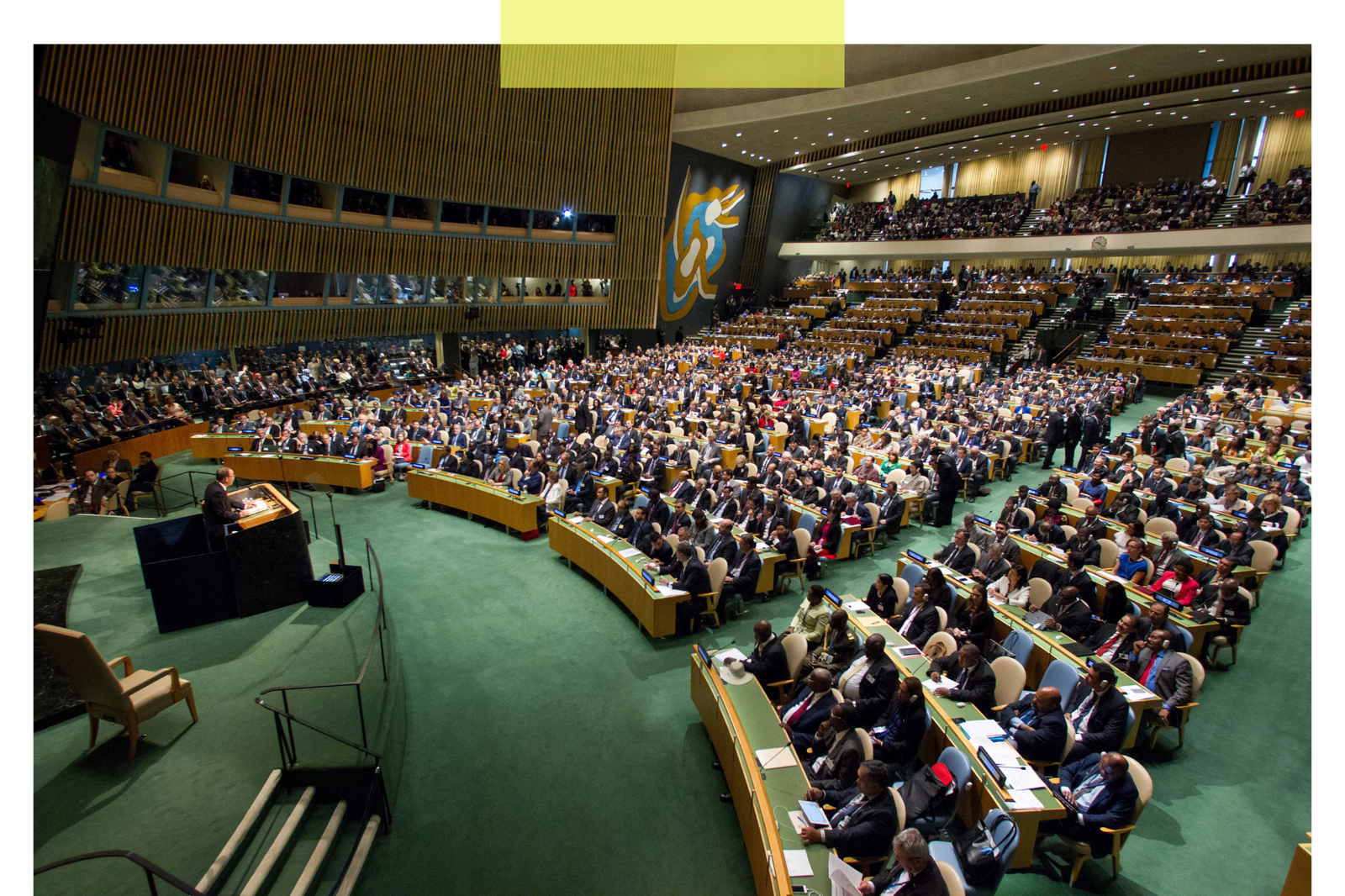
Image from a past UN General Debate. Credit: UN Photo/Loey Felipe
Flipping the script
A handful of speakers departed from the prevailing script based on traditionally masculine performance.
Some of the most notable examples came from inspiring female leaders, including Mia Mottley, Netumbo Nandi-Ndaitwah, Mulipola Anarosa Ale Molioo, and Sylvanie Burton, of Barbados, Namibia, Samoa and Dominica respectively. Their remarks spoke to the power of care and community — traits generally coded as feminine. Iceland’s Foreign Minister, Thorgerdur Katrín Gunnarsdóttir, spoke about the backlash head-on saying “giving a woman equal rights does not take rights away from a man.”
A handful of male leaders stepped up to call out systemic issues. Spain’s Prime Minister, Pedro Sánchez used the UNGA platform to warn of the threat of the far right and the need to defend feminism. Brazil President, Luiz Inácio Lula da Silva, evoked Martin Luther King to frame men as agents of change: “what self-centered men have torn down, other-centered men can build up”.
Having been a notable male voice on gender injustices during his term, UN Secretary-General, António Guterres, used his final UNGA address to call out gender inequality as “the most universal form” of inequality globally. Announcing the milestone of gender parity across senior UN leadership for the first time, Guterres said “equality is not a dream, it is a decision”.
In his opening address, the incoming President of the General Assembly, Khalilur Rahman, called out misogyny alongside antisemitism, Islamophobia and homophobia as forms of hatred, “repackaged and relabelled.” That gender equality and structural injustice are named at the highest levels of the UN is a welcome start. Whether this shows a genuine commitment to systemic change, or simply high-level lip service, remains to be seen.
The question of who will be the next Secretary General appeared in several leaders’ speeches. A small handful of countries — Sierra Leone, Saint Vincent and the Grenadines, the Bahamas, Timor Leste, and the Dominican Republic — used their addresses to openly call for a Madame Secretary General and an end to the 81 year male monopoly of the institution’s highest leadership position. MenEngage Alliance has joined feminist calls for more Member states to do the same and elect a feminist woman leader to the role.
Words and deeds
Paying attention to high-level speeches is not merely an academic exercise. Whether leaders say things plainly, or require some reading between the lines, they are communicating a political position that has real-world impacts on us all, particularly the most marginalised groups.
When leaders break masculine political norms and speak to qualities typically associated with femininity, it reveals that there are other ways to do leadership. We caught glimpses of that at UNGA81, but transformative language remains rare. The dominant narrative continues to speak to militarism and dominance reflecting the current state of geopolitics in an age of remilitarisation.
As long as the highest levels of global leadership are modelled on power-over, competition, and might, we will remain a long way from a politics of cooperation, social justice, and sustainable peace.
The challenge remains in working across movements to build the critical mass for systemic change, and the kind of leadership that can build it with feminist movements, women’s rights, human rights, and accountability at the center.
Learn more about how MenEngage Alliance is building a new paradigm for leadership at menengage.org/power